The Welsh Wire: Leading a Family Business from the Outside ft. Nelson Sanchez of RoMan Manufacturing
The Welsh Wire: Being a Non-Family Leader in a Family Business ft. Dave Russell from Hastings Hot Line Tools & Equipment
The Welsh Wire: Inside the Advanced Manufacturing Expo with Creston Industrial’s CEO
The Welsh Wire: Brewing Success with Chris O’Neill of One Well Brewing
From Lumber to Legacy: Monsma Marketing Builds a Family Future
On a late summer afternoon, Jane Lovell is standing in the middle of a bustling warehouse. Her voice carries above the hum of forklifts and the rustle of shrink-wrap. Rows of towering racks stretch out like city blocks, packed with building products — from aluminum railing to pallets of the company’s signature, Tyvek House Wrap. Machinery and team members weave in and out, scanning barcodes, moving loads, and shouting greetings to Jane. It’s busy. It’s efficient. And for Jane, it’s deeply personal.
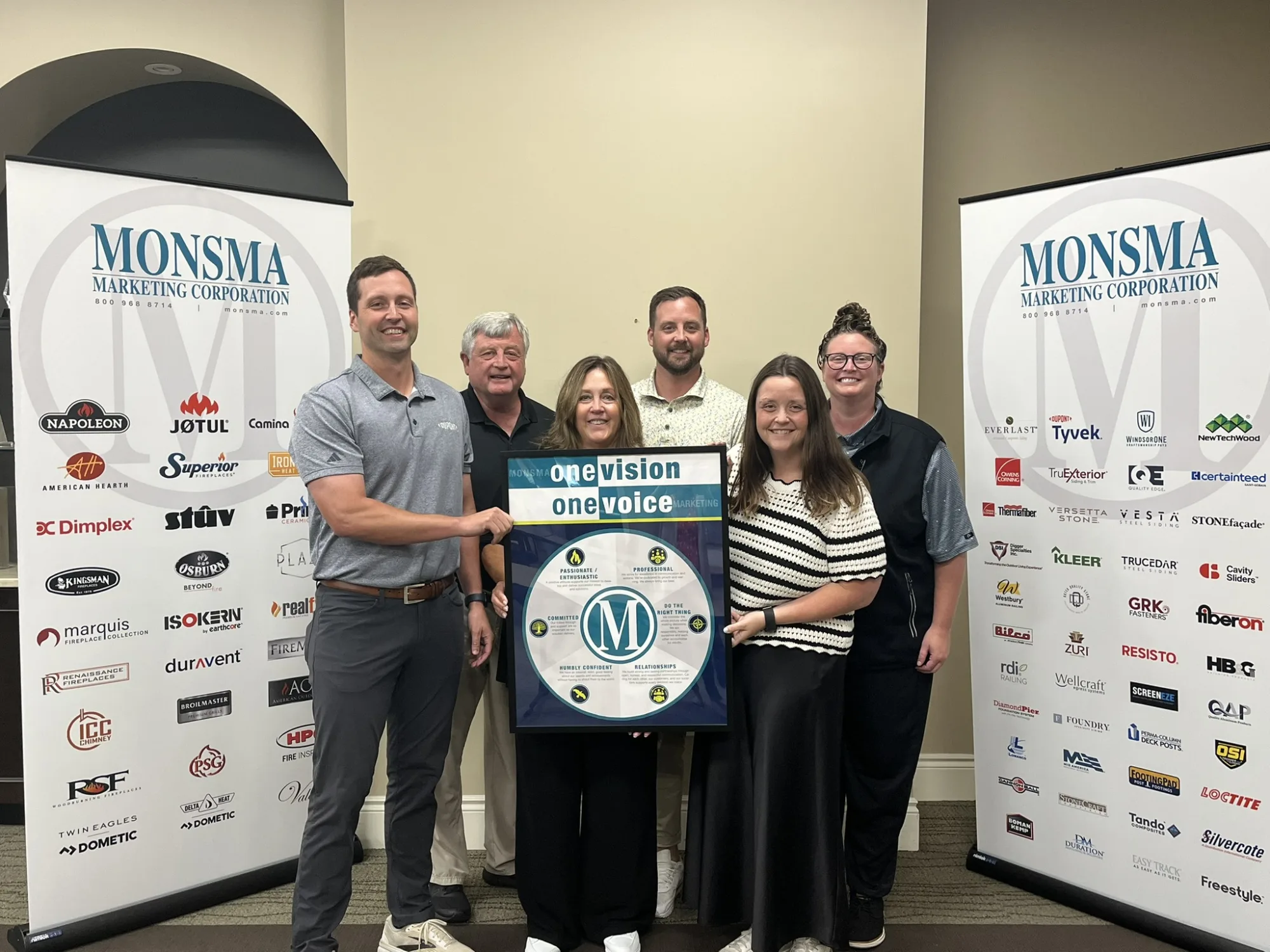
This year marks the 90th anniversary for Monsma Marketing. After starting his career at US Gypsum, Nick Monsma, Jane’s father, heeded his entrepreneurial spirit and started a lumber brokerage business out of his family home. Eventually, he bought Grand Rapids Reserve Supply, shifting the company from commodity products into specialty building materials and renamed it Monsma Marketing.
One risky gamble put the company on the map: distributing Tyvek house wrap before it was required by building code. “People thought we were crazy,” Jane recalls. “But my dad believed it was the future — and he was right.” Tyvek remains one of their top-selling products today.
Hammering out Change: Jane and Ken Build a New Era
Jane’s career did not start here. She had no desire to enter this “all-male industry.” Earning a master’s degree in social work, she obtained a position running non-academic programs in a school. When her position was eliminated in 1985, her father convinced her that now was as good a time to try working for the family business. Her first role was called “Special Projects.” She was charged with modernizing the phone system and converting hand-written invoices into a digital computer system. She even bought plastic hammers for the employees – so they could “pound out their frustrations” as they learned to navigate and master all the new technology.
Jane’s husband, Ken, joined her in the business, expanding into fireplace and hearth supplies—now 20–25% of sales—and later opened and ran Heritage Fireplaces. Ken shares, “Working with your spouse can be a challenge. You can disagree at work, but you need to come home and not be disagreeable.”
Thirteen months later, Nick unexpectedly passed away, leaving 28-year-old Jane and her cousin George — then 35 — to lead the business. Selling was never an option. “We always knew we’d keep it in the family,” she says.
From Playing to Participating
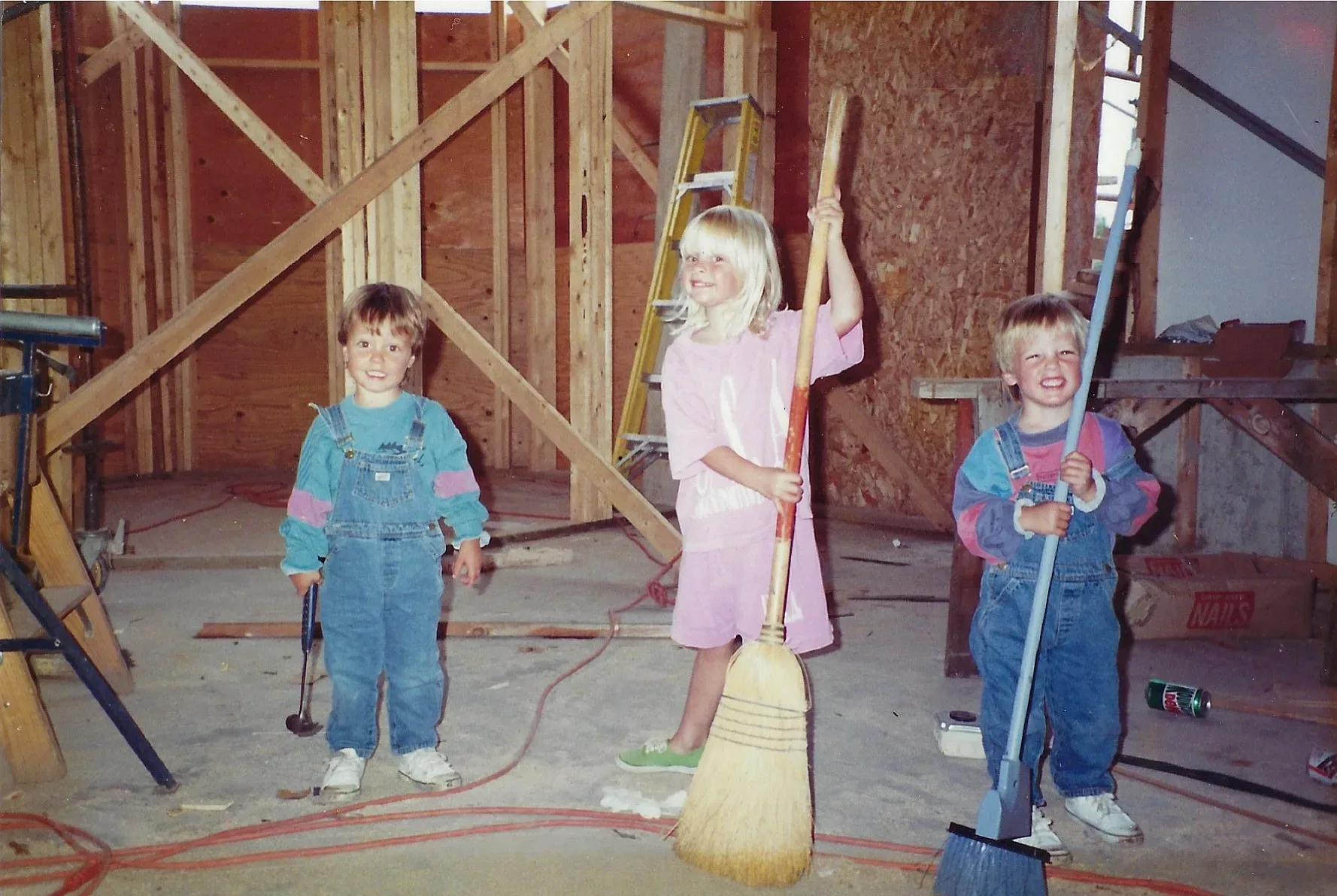
That commitment has carried through three generations. Jane and Ken’s kids grew up in the family business, often coming to work on Saturdays. Jane recalls taking them to Monsma’s original building, with its dark, dank basement and noisy old grain elevator. “We told them our job was to get to the back of the basement to fight the rats for money from the money tree,” Jane said. Tiptoeing through the dark, the kids, armed with plastic bats, eagerly joined in play. Though the rats were never seen, the shrieks and giggles made Saturday mornings an unforgettable ritual for the Lovell children.
After all building careers elsewhere, all the Lovell children work in different divisions of the company. “We never pressured them,” Jane continued. “They had to bring something to the table.”
Matt, now based in Denver, started in the warehouse and worked his way up to business integration manager. Ryan left Ford Motor Company for a Tyvek specialist role and now leads market creation. Paige transitioned from nonprofit work into inside sales for the Hearth Division. Kelsey spent a decade in accounting at Waste Management before becoming the company’s corporate controller. “We all found our own natural way here. Individually, at different times and different points of our lives. And it was a true wanting to be here versus feeling forced or obligated,” shares Jane’s oldest son, Matt.
A Warehouse in Motion
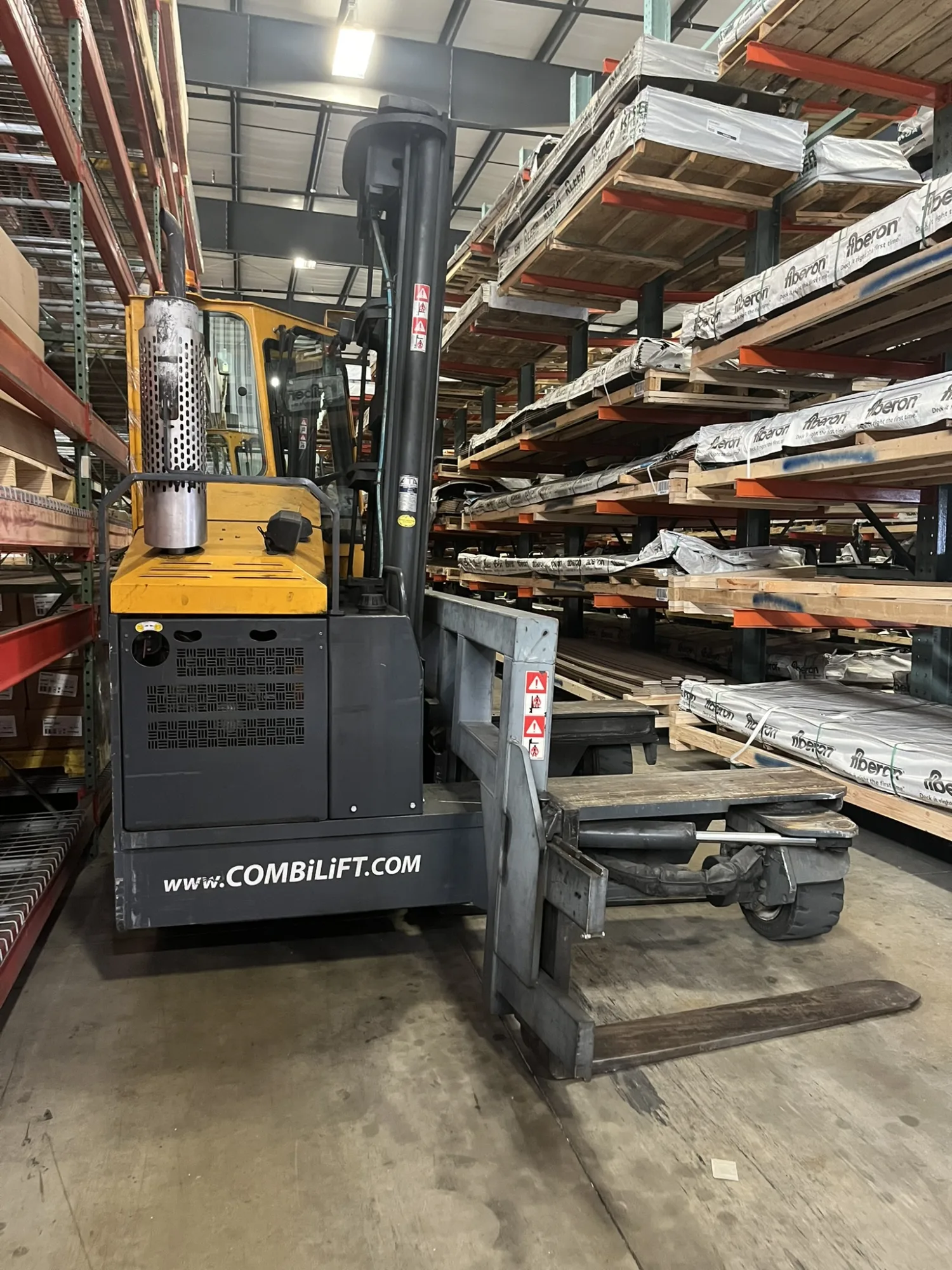
The warehouse itself tells a story of adaptation. Once too large to fill – it was fully occupied within months. Expansions soon followed, extending beyond a former parking lot and even mobile park. The latest transformation is underway. Old racks are being removed, systems rearranged, and processes refined. At the center of it is a Warehouse Management System (WMS) which was implemented over a year ago. Now, every product is barcoded the moment it arrives, tracked as it moves to a shelf, onto a forklift, onto a truck, and out to a customer.
“We can see exactly where something is — and how fast it’s moving,” says David David Gushiken, Vice President of Operations. “It’s about accuracy, efficiency, and making sure we can grow without just adding more people.”
Mobile racking systems increase storage density, while curtain-side trailers allow drivers to unload partial orders quickly at multiple stops. In the yard, 14 semis head out daily to Michigan, Indiana, and Ohio; hearth products ship to 39 states via common carriers. Orders range from 20-foot-long boards to cartons of railing, loaded like a game of Tetris to maximize space. The efficiencies aren’t just technical. Jane and her team are carving out a dedicated warehouse meeting space with comfortable furniture and vending machines — a place to start each shift together. “It’s about creating an environment where our people want to be,” she says.
Building the Momentum
The company has always grown carefully, but the pace has quickened. In the past 18 months, they’ve acquired three companies—including Hanson Marketing in Detroit and Majestic in Denver—with another out-of-state acquisition soon to be announced. Each brought new products, facilities, and perspectives, dramatically expanding Monsma’s reach in building materials and hearth products.
Jane explains that private equity is active in these segments, competitors and customers are increasing in size and scale. With a commitment to remaining family owned comes an associated commitment to being first choice and staying relevant for our suppliers, customers, and the employees we serve. Continued expansion is not an option for us”, Jane said. “It’s a requirement.” Along with offering an expanding line of premium products, Monsma’s focus on family and relationships will continue to highlight the human element as it adopts advanced technologies to serve the industry more efficiently.
One Vision. One Voice.
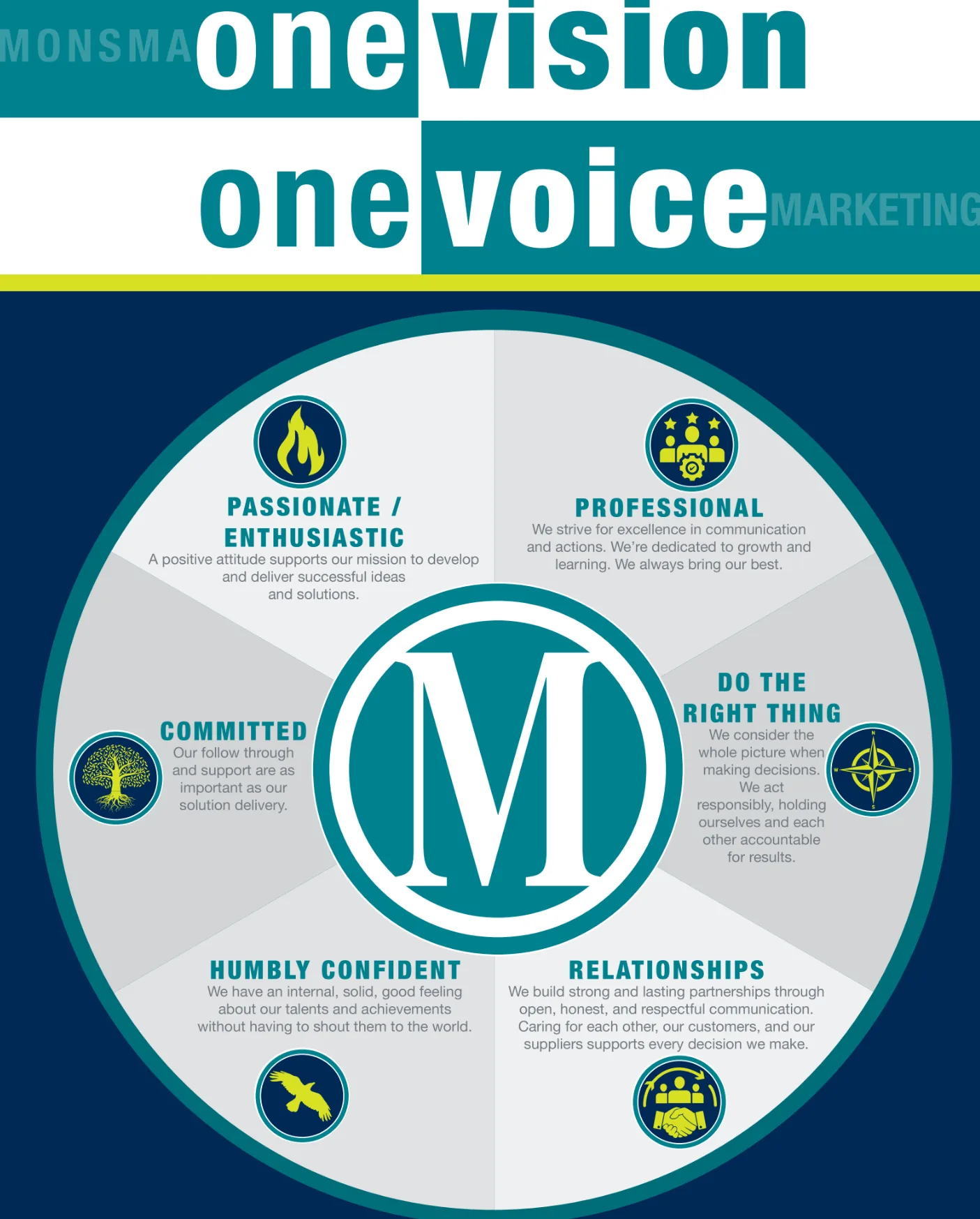
Through growth, one constant is the company’s core values: commitment, passion, professionalism, relationships, doing the right thing, and humble confidence. They’re posted on walls, recognized monthly, and woven into decision-making. In an employee survey, the most common word people used to describe the company was “family.” That, Jane says, is the true measure of success.
Framing for the Future
From a one-man lumber brokerage to a multi-state distributor with over 150 employees, the company has grown far beyond what Nick could have imagined — yet it still feels, to Jane, like a company of ten.
When it became clear that the family was committed to carrying Monsma into its third generation, Jane realized the business needed more than tradition to thrive. She saw that building a formal structure and creating intentional learning opportunities for the next generation would be essential to carry the company forward.
Beginning with Annual Family Meetings in 2019 soon evolved into a quarterly cadence by 2022 and a more formal weekly council meeting in 2024. Ken and Jane took full advantage of FBA offerings which guided them on a multitude of topics including estate planning, family business leadership, and succession. “The 6-part series ‘Leading Forward’ was especially valuable to me as a leader. I continue to apply what I learned from the moderator and others in that class to our business today,” Jane states.
The goal now is to scale toward $250 million in revenue without losing the closeness that defines them. That means investing in systems, facilities, and people while keeping one eye on the long game.
Opportunities, Jane says, were something her father always taught her to spot. “He’d say, ‘Opportunities happen every day. The question is, are you smart enough to see them, and do you have the confidence to go after them?’” “I think he would be pleased,” Jane reflects.
This interview has been edited for length and clarity. Email fba@fbagr.org if you are interested in exploring feature opportunities.
Family Business Alliance strives to help family businesses with the tools, resources, and connections to help businesses succeed. Learn more about our resources including Leading Forward, Succeeding in Succession, and Navigating Governance that help to advance family business in our community.
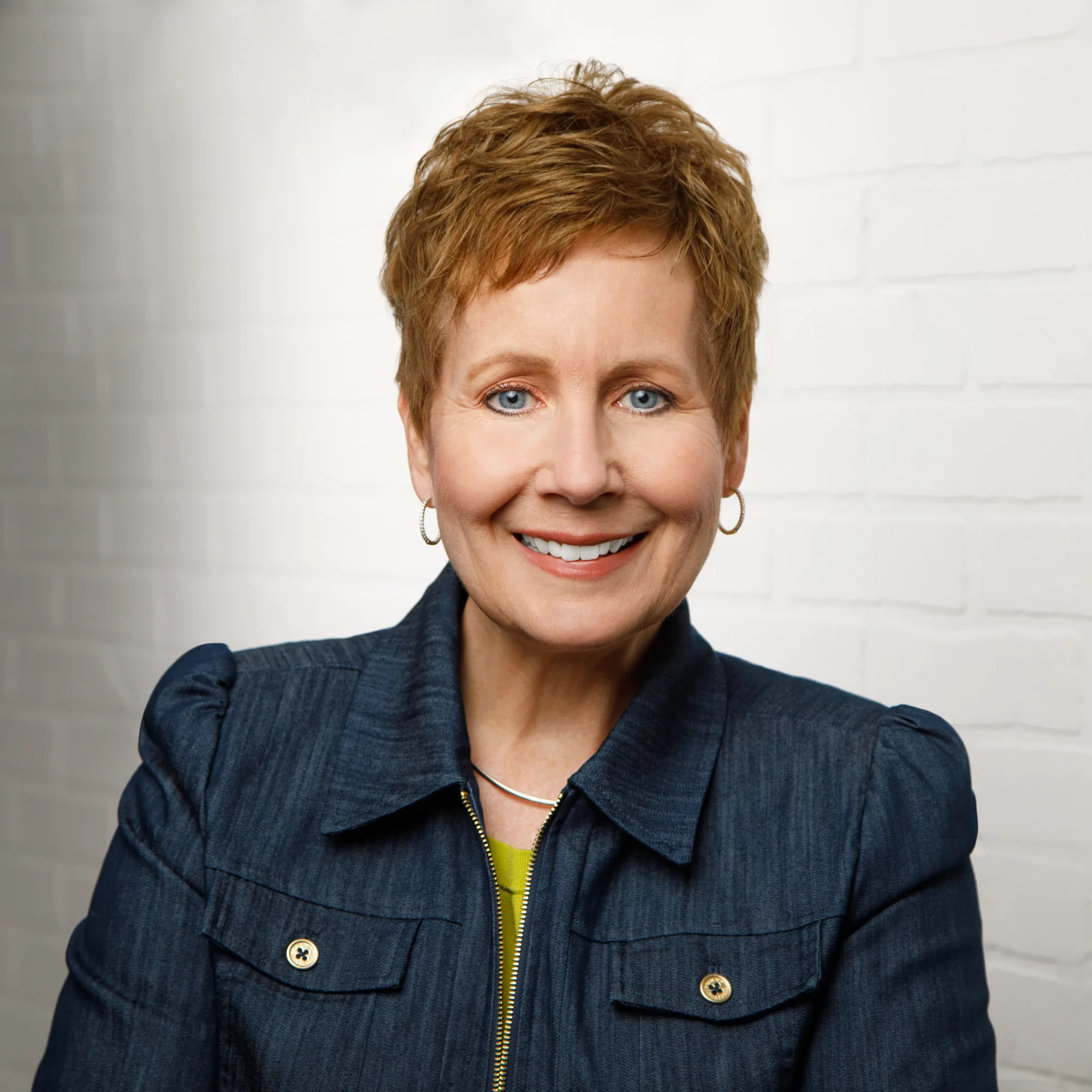
Family Business Leader Spotlight: Sheri Welsh
Entrepreneur-at-Heart to Family and Small Business Champion
From solo founder to family business leader, her journey didn’t just build a company—it ignited a passion for advocating on behalf of thousands of small business owners.
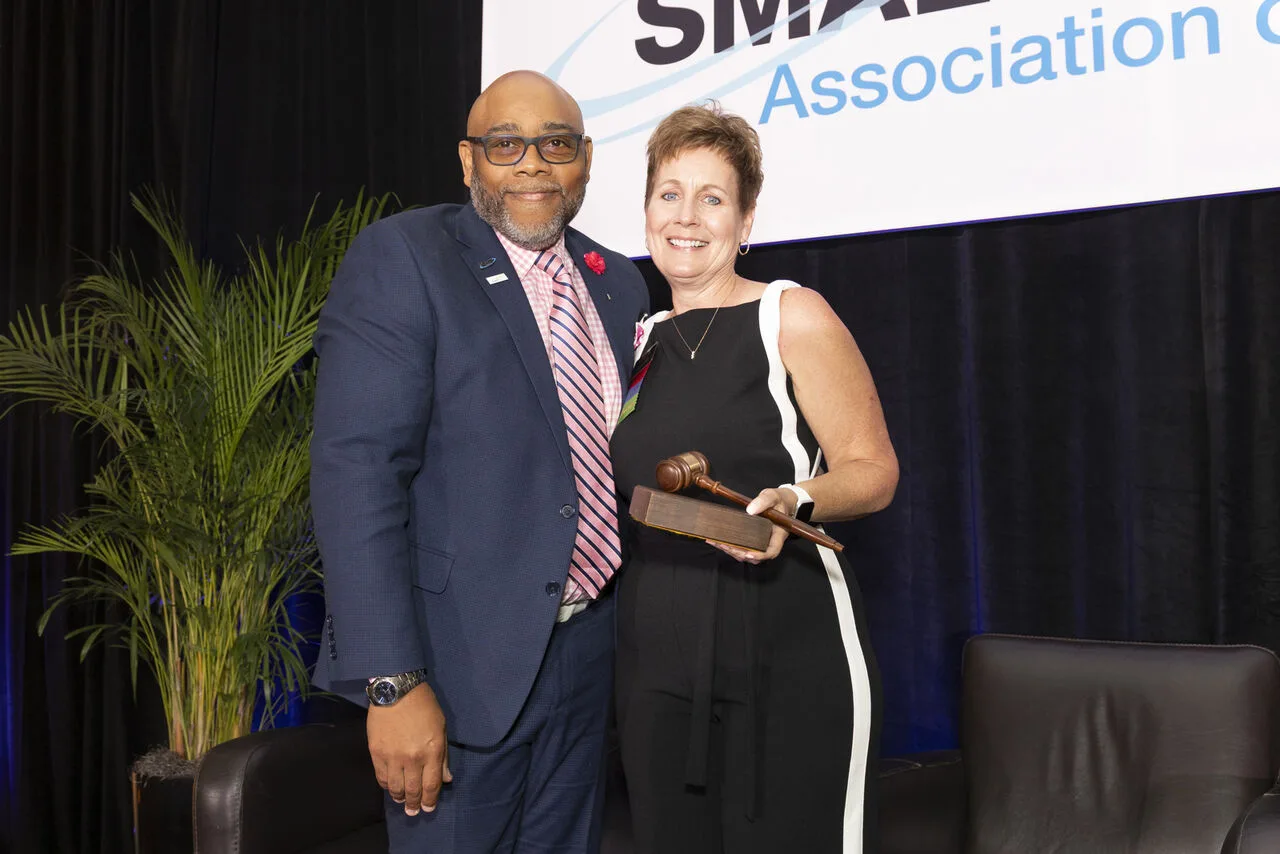
Small Business Association of Michigan, Chair
How did your family business journey begin?
I grew up working in our family business which my dad started in 1976, but honestly, I never had a desire to join the company after college (sorry dad!). I did however, always want to start my OWN business – I even mentioned it as a goal in my senior yearbook! When I started Welsh & Associates, I could never have envisioned that we would become a family business. I was delighted when my son approached me and wanted to join me in the work! Today, both my son and daughter-in-law work in our business and it brings me great joy to share the journey with them.
What has surprised you the most about your family business journey?
How respected and trusted family businesses are. As a kid, working in my dad’s business in a small town, I never realized that. Now, living it out in our business, our clients and candidates tell us how much they appreciate the culture we have created in our family business, which is a large part of what makes us unique and creates a competitive advantage in our industry.

What leadership lesson(s) have you learned that you want to pass on to the next generation?
There are so many! And I learn more every day. The most important ones are:
- Take good care of the people that take care of you. Your employees and your clients are your most valuable assets. Treat them with appreciation and kindness every day.
- Seek first to understand – then be understood. I borrowed that from Covey, but listening to others with empathy and full attention creates deep understanding and develops healthy successful long-term relationships. It’s all about people.
- Take care of the goose that lays the golden eggs. If you don’t take care of yourself first, the golden eggs WILL stop. It’s game over – for you, your family, your business (Covey Principle).
How did you become involved with Small Business Association of Michigan (SBAM)?
I joined SBAM as a member in 2012, with a desire to be part of an organization that advocated for the success of small business. I was not disappointed! Shortly thereafter, I began serving on Leadership Council and eventually joined the board of directors. It’s been a joy to serve at SBAM for well over 10 years and represent the interests of our 33,000+ members statewide as we work to make Michigan a place where all small businesses can grow and thrive.
How has your own experience as a small business owner shaped your leadership at SBAM?
This is one of the few boards I’ve served on where I have lived experience related to the work I’m engaged in. My small business, entrepreneurial experience completely shapes the perspective and leadership that I bring to my service at SBAM. After 23 years in business, I haven’t forgotten what it’s like to be in a start up phase, worry over a business blunder or have a sleepless night processing my next strategic move. I live out the daily challenges of running a business with my fellow members every day and I genuinely care about their concerns and needs – which are often the very same as mine. It’s an honor and a privilege to represent those concerns and work to address them in my role as Board Chair.
What are the biggest challenges small business owners in Michigan are reporting right now—workforce, inflation, access to capital?
Actually, one of the greatest concerns our members have right now is their ability to provide affordable health insurance for their employees. It’s no secret that insurance providers have been passing along double digit increases to Michigan’s small businesses for the past several years. This is making the cost of providing health insurance benefits nearly untenable for many small businesses. SBAM has been at the forefront of raising this issue and convening conversations to address skyrocketing costs. There is no easy answer to this challenge, but we’re willing to address it on behalf of Michigan’s small businesses.
What types of resources or programs have proven most impactful to your members?
Of recent, three programs come to mind:
- When ESTA was passed by the Michigan Legislature, it sent shockwaves through the small business community. SBAM was at the forefront of providing information, webinars and a toolkit to its members, helping them navigate through compliance with this new legislative mandate.
- SBAM’s Small Business Support Hub Grant provides free programming, courses, events and support to businesses who were disproportionately impacted by the COVID-19 pandemic. We have helped hundreds of businesses recover from the devastating effects of the pandemic.
- Nurture Benefits is a new program we are launching this fall. This program is designed to expand access to health, life and retirement options for child care professionals across the state. The program aims to grow and stabilize Michigan’s early childhood workforce by making it easier for child care providers to attract and retain career professionals.
What is bringing you joy?
I sincerely find joy in many things which include my faith, my family, my work and giving back to my community. However, right now, I’m EXCEPTIONALLY joyful about my first grandchild, born June 27th AND a second grandchild coming in November! It is truly pure JOY!

Welsh & Associates
Founded in 2002, Welsh & Associates is recognized as an industry leader in executive and employment recruiting services by companies across the nation, including key markets throughout West Michigan.
Built Different: A Candid Conversation on Leadership, Legacy, and Change
To explore what makes family businesses resilient and sustainable across generations, Family Business Alliance invited three seasoned leaders to share their insights on legacy, innovation, governance, and next-gen readiness.
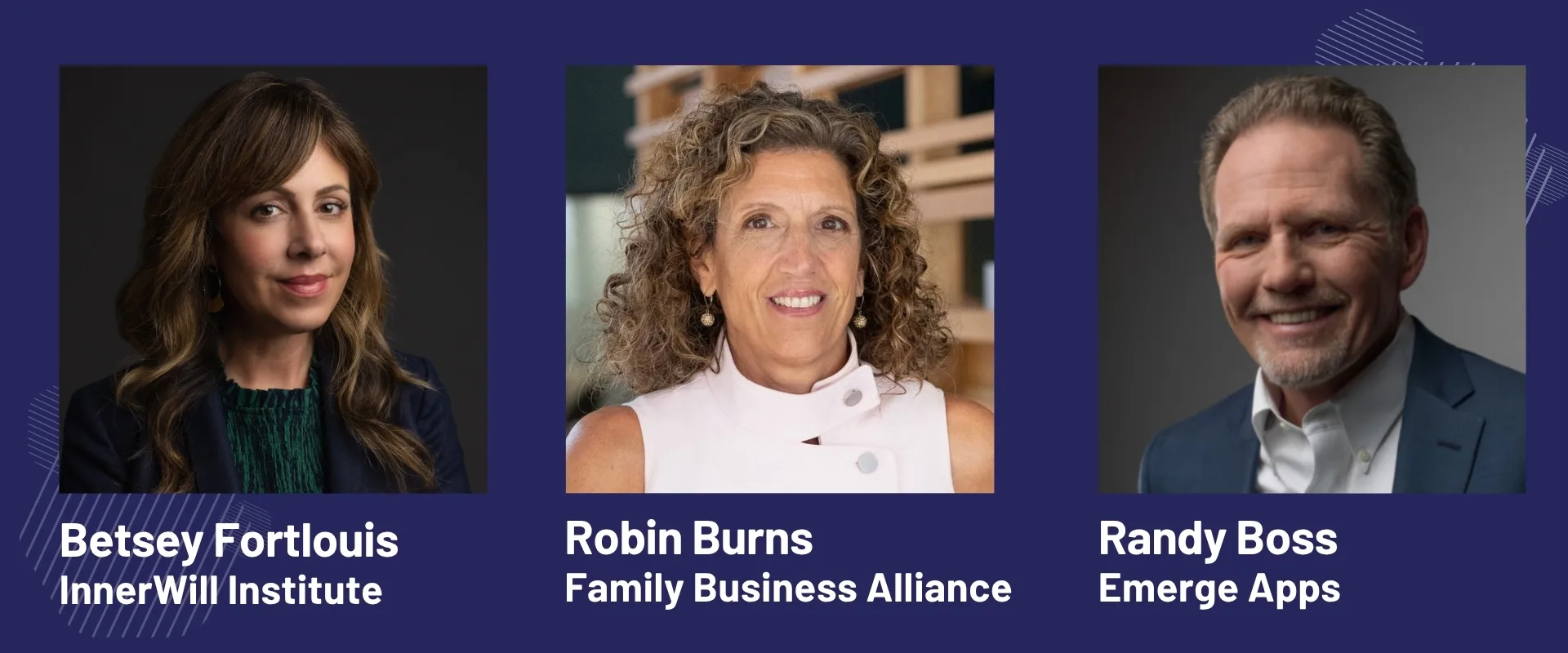
- Betsey Fortoulis, Director of Partnerships and Development, Family Business Advisor at InnerWill
- Robin Burns, Director, Family Business Alliance
- Randy Boss, Co-founder of Emerge Apps and Chairman, Family Business Alliance
Q: From your research and experience, what are some of the most significant, often unseen, strengths that family ownership brings to a business?
Robin Burns—For many, business is an extension of the family. This emotional connection leads to extraordinary levels of dedication, especially during difficult times. Unlike corporate environments, family members are more likely to make personal sacrifices, show up on the “front lines,” and roll up their sleeves to ensure success. This deep-rooted loyalty can also extend to their employees. When employees see family members committed to the business in the day-to-day, they often develop a strong sense of belonging and loyalty themselves.
Betsey Fortoulis—In a rapidly changing world, the family often represents a source of consistency and continuity in a family enterprise, providing a strong foundation and a long-term perspective. This can be particularly valuable as external factors and market conditions shift, offering a stable element amidst the turbulence and ambiguity.
Values also have a multigenerational impact. We pass them on to our children, and our children’s children. Therefore, when families align around values and shared purpose, they have secure building blocks for the next generation to honor the legacy of the founder while at the same time having the freedom to adapt and innovate to ensure continued business success during changing times.
Randy Boss—The strength of family business often lies beneath the surface. There’s a level of commitment, trust, and shared purpose that’s hard to replicate elsewhere. You’re not just building something for short-term gain—you’re creating something that matters to the people you care about most. That long-term mindset shapes how decisions are made, how employees are treated, and how risks are taken. At Emerge Apps, our values guide us—not just strategy.
Q: We often hear about the “founder’s syndrome” or the challenges of subsequent generations living up to a legacy. How can current leaders, both family and non-family, work to build a sustainable future that honors the past yet adapts to new realities?
Robin Burns—Founders are often by nature visionary entrepreneurs who built their companies from the ground up, taking significant risks to provide for their families. Their legacy is not only in the enterprise they created but in the values, resilience, and ingenuity they demonstrated. To honor this legacy, current leaders should embrace an entrepreneurial mindset – they need to see themselves not as the caretaker – but as the new founder. By investing in innovation and demonstrating a willingness to take calculated risks – they can honor the original spirit of the business as well as propel it forward. Also, these new leaders should formalize and adopt the core values that guided the founder. By clearly articulating and embedding these values into the company culture – they become the compass for future decision making and evolving business strategies.
Betsey Fortoulis—Many family business leaders are reluctant to shift from a personal relationship with the founder to a more formal relationship with a successor. Most of these leaders have developed unique ties with the founder that extend well beyond the parameters of a typical working relationship. We would encourage leaders to ensure that their strategy is focused at the enterprise level, rather than at just the business level. The three circles (Ownership, Family, Business) are interconnected and their missions, visions, values, and goals should be aligned, consistent and mutually supportive.
Randy Boss—Founders have to learn to let go—but not disappear. That’s a tension we all face. It’s about making room for the next generation to lead while still being available as a mentor and sounding board. I’ve found that when you focus more on principles than control, the business can grow beyond you. It’s not about preserving the past exactly as it was—it’s about honoring it while giving others permission to evolve it.
Q: The “next generation” often has different perspectives and aspirations. What do you see as emerging trends or concerns from this next generation?
Robin Burns—Technological advancements continue to interface with the business community at an unprecedented and accelerated pace. Recent studies from next-generation leaders continue to express concern about whether their organizations are equipped to adjust and adopt to meet industry innovation. As a result, there’s a sense of urgency to not just catch up, but to build a future-ready foundation that can adapt to constant change through digital infrastructure and data-driven decision-making.
Betsey Fortoulis—The pace of change is accelerating, particularly in the realm of technology and global interconnectedness. AI is here, and how to leverage it ethically and effectively is a big concern/opportunity. There is also a much stronger focus on well-being and mental health. How do we reward productivity over suffering? Finally, the next gen is very focused on purpose-driven work – making it more important than ever to clarify an organization’s mission, vision, and values and align them with the strategy, leadership competencies, and processes.
Randy Boss—They see the world differently—and that’s a good thing. The next generation wants purpose, balance, and a workplace that reflects their values. They’re not afraid to challenge tradition if it means better alignment with people and impact. What’s encouraging is that they’re not rejecting the business—they’re just asking, “How can we do this better?” At Emerge Apps, my sons are constantly pushing for better tools, more clarity, and a more flexible approach to work.
Q: It appears like the external and economic disrupters continue to challenge businesses. What internal strengths or strategies can help them to adapt and thrive?
Robin Burns—Look back to move forward. From the early startup days, your family business has never shied away from challenges. Reflect on the tough times—what obstacles did you face, and how did your family and the business respond? What strategies proved effective? How did you adapt and realign the organization to overcome adversity? Many of those same approaches can be applied again as you stay committed to the long game.
Betsey Fortoulis—Back to the fundamentals…what’s your “why”? Leaning into the family legacy and the family as a source of consistency during disruption can be the beacon. When the “why” is clearly defined, the “how” can be easily adapted.
Randy Boss—You can’t control external disruption, but you can strengthen your foundation. Open communication, trust between generations, and a shared vision make it easier to pivot when things change. It’s also about being willing to challenge the status quo—even if that status quo came from you. At Emerge Apps, we’ve always focused on learning fast, staying close to the customer, and being willing to evolve.
Q: Looking ahead, what do you believe is the most critical area family-owned businesses in West Michigan and beyond should be focusing on to ensure their long-term sustainability and success?
Robin Burns—Engagement! Studies demonstrate that legacy and connection to business is a predominant reason for the next generation to join the family business. Many second and third generation organizations do not have formal structures in place. Family meetings and governance programs are the ideal platform to build an engaged next generation (even as young as middle school and high school). Formal governance creates a space to understand family history, mission, and values. Next generation members can begin to build an identity of ownership and accountability to the members of the family and the business.
Betsey Fortoulis—Stay connected with your peers. Family Business Alliance is such an invaluable resource for family-owned businesses in West Michigan and beyond. Learn from each other and share what’s working and not – build a bigger table, not a higher fence.
Randy Boss—Succession and leadership development—no question. Too many businesses stall because they wait too long to plan for transition. It’s not just about choosing the next leader; it’s about building a leadership mindset throughout the family and the company. That takes time, structure, and a willingness to have honest conversations. The earlier you start, the better your chances of sustaining success across generations.
Q: What do you identify as an emerging trend in family business organizations?
Robin Burns—In a rich M&A market, family business organizations are proactively acquiring other family firms to build scale and enhance service offerings. One key predictor of success in acquisitions is acquiring an organization with a similar culture. When values, leadership styles, and long-term vision align, integration is a smooth and sustainable way for growth. We’re seeing this trend not only in local markets but across a national level, as family businesses look beyond their regions to find like-minded partners that support long-term strategic goals.
Betsey Fortoulis—Technology and the digital landscape to help honor family legacies and impact communities for the better.
Randy Boss—Families are becoming more intentional—more governance, more communication, and more willingness to bring in outside perspectives. I’m also seeing a rise in emotional intelligence—people talking about things like identity, conflict, and personal growth, not just ownership and operations. That’s a healthy shift. Families that grow stronger together build businesses that are better equipped to last.
This content has been edited for length and clarity. Email fba@fbagr.org if you are interested in exploring feature opportunities.
Family Business Alliance strives to help family businesses with the tools, resources, and connections to help businesses succeed. Learn more about our resources including Leading Forward, Succeeding in Succession, and Navigating Governance that help to advance family business in our community.
Subscribe
"*" indicates required fields
Layer by Layer: Engineering a Lasting Legacy at Master Finish
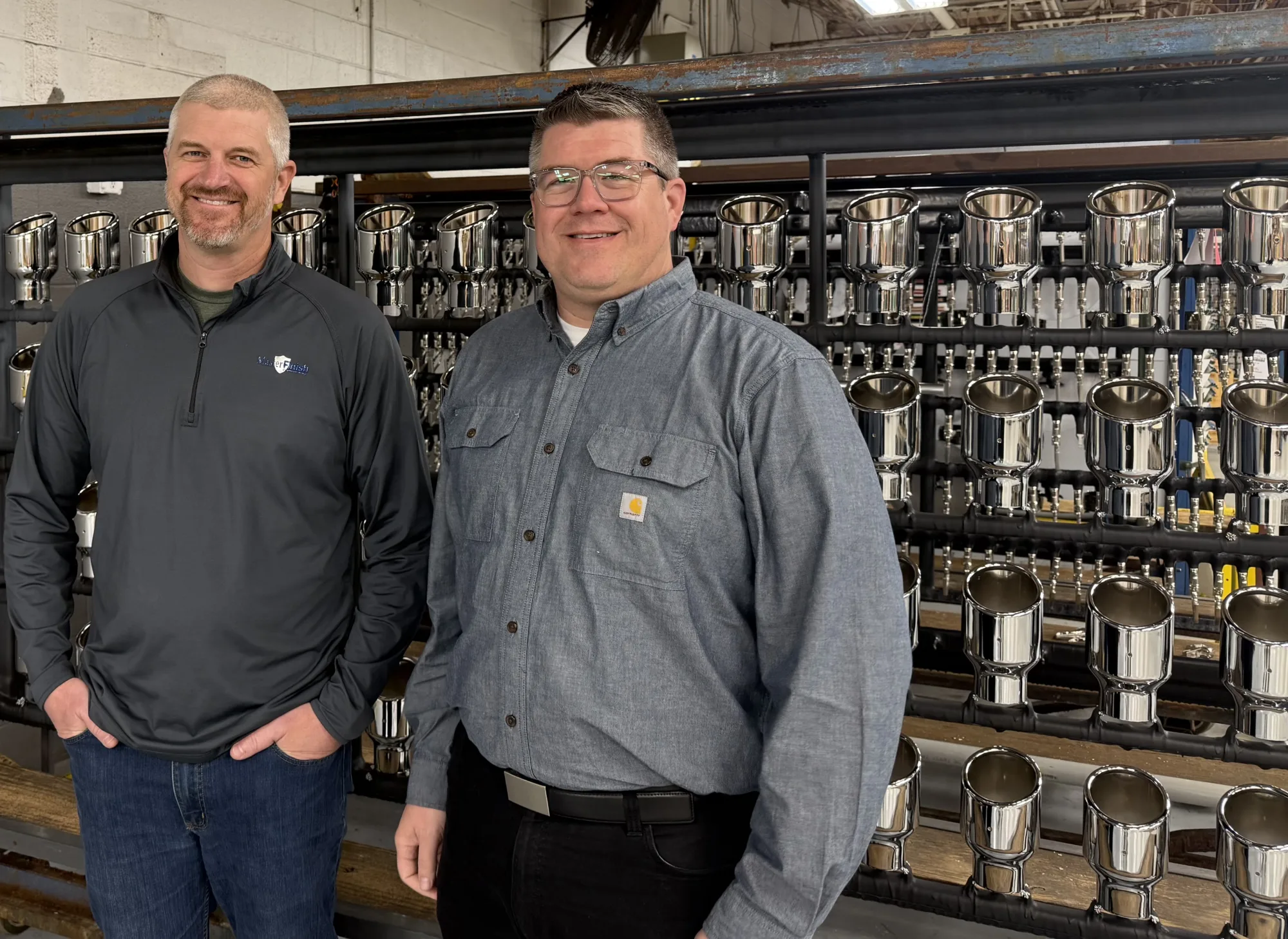
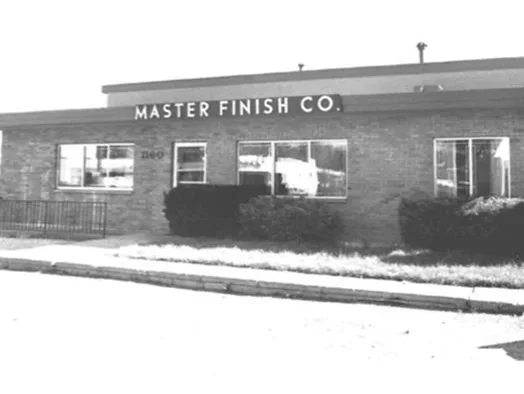
The founder of Master Finish didn’t start in manufacturing—he started in a bakery. John Mulder, the son of a Dutch immigrant, spent his days shaping dough in his father’s shop and his nights in the basement of a Grand Rapids auto dealership, deburring metal parts by hand. What began with window cranks and door handles turned into something bigger: a chrome plating business built on process, precision, and a mindset that still drives the company 66 years later.
John’s son Dale joined the company in 1977, bringing both engineering expertise and a values-driven approach to the business. Dale called each plating process a “recipe”—a nod to his father’s baking roots and his own belief in getting every step right. Today, Master Finish is led by brothers John Mulder, President, and Aaron Mulder, CEO—the third generation to carry the family business forward.
“When we went camping, our dad instilled in us this principle: leave it better than you found it,” the brothers recall. “That’s how Dale ran Master Finish—and that’s how we run the company today.”
With defined roles and a shared commitment to core principles, John and Aaron modernized operations while preserving the company’s foundation of teamwork, honesty, innovation, and service.
“We were able to spend a great deal of time working with our dad,” John said. “He immediately helped us determine how to carve out areas of the business where our strengths could be put to use.”
That wisdom set the stage for their next step. Nearly ten years ago, they implemented the Entrepreneurial Operating System (EOS) to provide a framework for growth, clarity, and accountability. “EOS has been a great way for us to keep progressing and improving,” Aaron said.
But process is only part of the story. “We are most proud of our team, the men and women that we call part of the Master Finish family,” John said. “We find ways to celebrate together, and we suffer and mourn together.”
That sense of connection extends beyond the shop floor. The brothers are long-time participants in the Family Business Alliance and Grand Rapids Chamber communities they say play a vital role in helping them grow as leaders.
“Business is never conducted in a vacuum,” John said. “We all need a great network of vendors, customers, and service suppliers to succeed. There’s great value in the educational events offered by FBA and the Chamber. They help us stay informed, understand current business conditions, and connect with great people in the broader business community.”
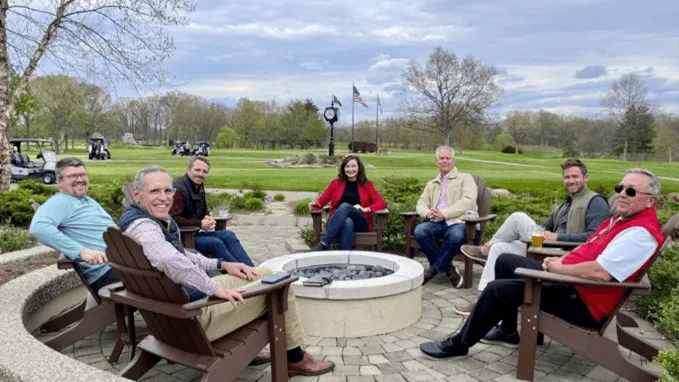
The brothers emphasize the value of FBA peer groups, where they meet monthly with other family business leaders to navigate challenges, trade insights, and stay accountable. Far from superficial networking, these closed-door sessions foster honest discussions on leadership pressures, strategic shifts, and personal growth. For John and Aaron, the benefit is mutual: the chance not only to gain perspective—but to offer it.
“You’re rarely the only one trying to solve a problem,” John said. “The groups brainstorm options that can help solve it collectively, for everyone involved. Creating a network of others who help you on your path—and whom you help on theirs—makes the journey far better and more effective.”

That same collaborative mindset fuels how they run the business, always looking for smarter, safer ways to evolve. Master Finish has long been ahead of the curve in sustainable metal finishing, recycling all plating waste and using trivalent chrome for over a decade to reduce environmental impact and improve workplace safety.
“Trivalent chrome is a much more beneficial process due to the reduced environmental impact and improved safety of the chemistry,” John said.
One area of growing interest is black chrome—a sleek, high-end finish gaining traction in the automotive industry, supporting both design flexibility and cleaner chemistry.
While today’s economic circumstances bring uncertainty, particularly around tariffs and shifting global production, the Mulders remain optimistic. “We’re seeing great new opportunities to bid on programs historically made overseas,” they said. “But we’re also seeing the other side of the coin—many are delaying launch decisions while there’s still a lot to be determined. It’s really a strange time in America.”
Through it all, John and Aaron lead with discipline—steady, thoughtful, and precise. From a basement startup to a global supplier, Master Finish proves that legacy isn’t just something you inherit. It’s something you build—layer by layer.
This interview has been edited for length and clarity. Email fba@fbagr.org if you are interested in exploring feature opportunities.
Family Business Alliance strives to help family businesses with the tools, resources, and connections to help businesses succeed. Learn more about our resources including Leading Forward, Succeeding in Succession, and Navigating Governance that help to advance family business in our community.
Five Skills to Thrive in Today’s Uncertainty

Dear Springboard:
“It feels like things are moving fast and the future is uncertain. I struggle with all this change and so does my team. What can I do to help them survive and ideally thrive in today’s environment?”
Signed me,
A Little Overwhelmed
Dear ALO:
We’ve looked at this before and examined the world through the VUCA lens – volatile, uncertain, chaotic and ambiguous. That perspective is still relevant.
For a fresh look, I’ve just completed a six-week online course led by Gabriella Kellerman. She and Marty Seligman, the creator of positive psychology, co-authored the book Tomorrowmind and the course was based on the book.
The premise of the course was to offer strategies to cope with the continually accelerating change we are living with today.

Their colleague John Seeley Brown likened today’s challenges to being in a kayak in whitewater rapids – immersed in a chaotic and relentless environment that requires us to frequently assess and respond to an ever-changing flow. With no let up.
Contrast the kayak in whitewater rapids to the work life of much earlier generations’ steady journey on a steamship (stable and predictable) and more recent workforces’ sailing (requiring some agility and adaptability). After extensive research, the authors have proposed five essential skills for thriving – captured in the acronym PRISM – Prospection, Resilience, Innovation, Social Connection and Mattering.
Offering a little optimism, it’s noted these are not innate and can be developed.
In one sense, we all need to strengthen our capacity for agility – to adapt to new circumstances.
Foster Resilience.
It is the ability to recover from setbacks and maintain well-being amidst adversity. We start with resilience because it provides a foundation for adaptability. Emotional regulation is one of its most important dimensions and so emotional intelligence is important.
Leaders can encourage self-awareness and self-compassion within their teams to create a culture where setbacks are seen as opportunities for learning rather than failures.
Cultivate Creativity to Drive Innovation.
Creativity is essential for solving today’s complex problems in our unpredictable world.
Leaders can support creative thinking by nurturing a psychologically safe environment to experiment without fear of failure. Plus, they can reward risk taking and unconventional thinking.
Strengthen Social Connections.
Strong relationships enhance collaboration, employee engagement and productivity. We know having a best friend at work boosts our sense of wellbeing. And, we all have a basic need to be seen and heard.
Leaders can foster an inclusive culture and sense of belonging, where every voice is valued. Also, they can promote mentorship programs that help to build trust – the oxygen of relationships.
The authors also cite a study that showed the importance of doing service. A test group of people who took a few minutes to help someone in need, when they were already feeling overwhelmed and time-pressured, felt better and a little recharged afterward.
So, getting out of themselves and being useful was worth the extra effort. That encourages the practical side of generosity even when someone feels like they are just surviving.
Instill a Sense of Mattering.
Employees who feel their work makes a difference are more engaged and motivated.
Mattering is even stronger than meaning. To know one’s effort has meaning is the bricklayer not building just a wall, but part of a cathedral. To believe his particular brick laying matters is for him to believe he is valued as an individual.
Leaders can clearly communicate how individual roles contribute to larger organizational roles. Building on that, celebrate achievements that align with shared values and provide feedback that highlights the impact of individual employees’ efforts.
Empower Prospection.
The authors call this the meta-skill for today’s challenges. Prospection is the ability to look ahead, anticipate possible outcomes and envision multiple future scenarios.
While we want to have a positive outlook, simply considering the possibilities of negative outcomes gives us a chance to develop different responses ahead of time and be ready to act effectively.
Leaders can offer training in strategic foresight and scenario planning. Also, they can encourage transparency and openness in considering potential challenges, and opportunities. It is healthy to deal with today’s problems and acknowledge the possibility of future issues.
We haven’t acknowledged the 900 lb. gorilla — the further advancement of AI and its integration into our everyday lives both at work and home. Many experts believe artificial general intelligence, or A.G.I., can become reality within a few years. It is usually defined as something like “a general-purpose A.I. system that can do almost all cognitive tasks a human can do.” It represents a significant jump in capability from today’s levels.
So, more big change is coming.
A Darwinian advantage (a little exaggeration for impact!) will go to those who: are agile and resilient; have a robust network of relationships; are open to experimenting and learning: are proactive in considering future possibilities and developing contingencies; and believe that they as individuals and their contributions matter.
Inherent in all of this is the necessity to get better at letting go.
Family Business Alliance strives to help family businesses with the tools, resources, and connections to help businesses succeed. Learn more about our resources including Leading Forward, Succeeding in Succession, and Navigating Governance that help to advance family business in our community.
Flour Power: The Family Story Behind One of America’s Oldest Mills
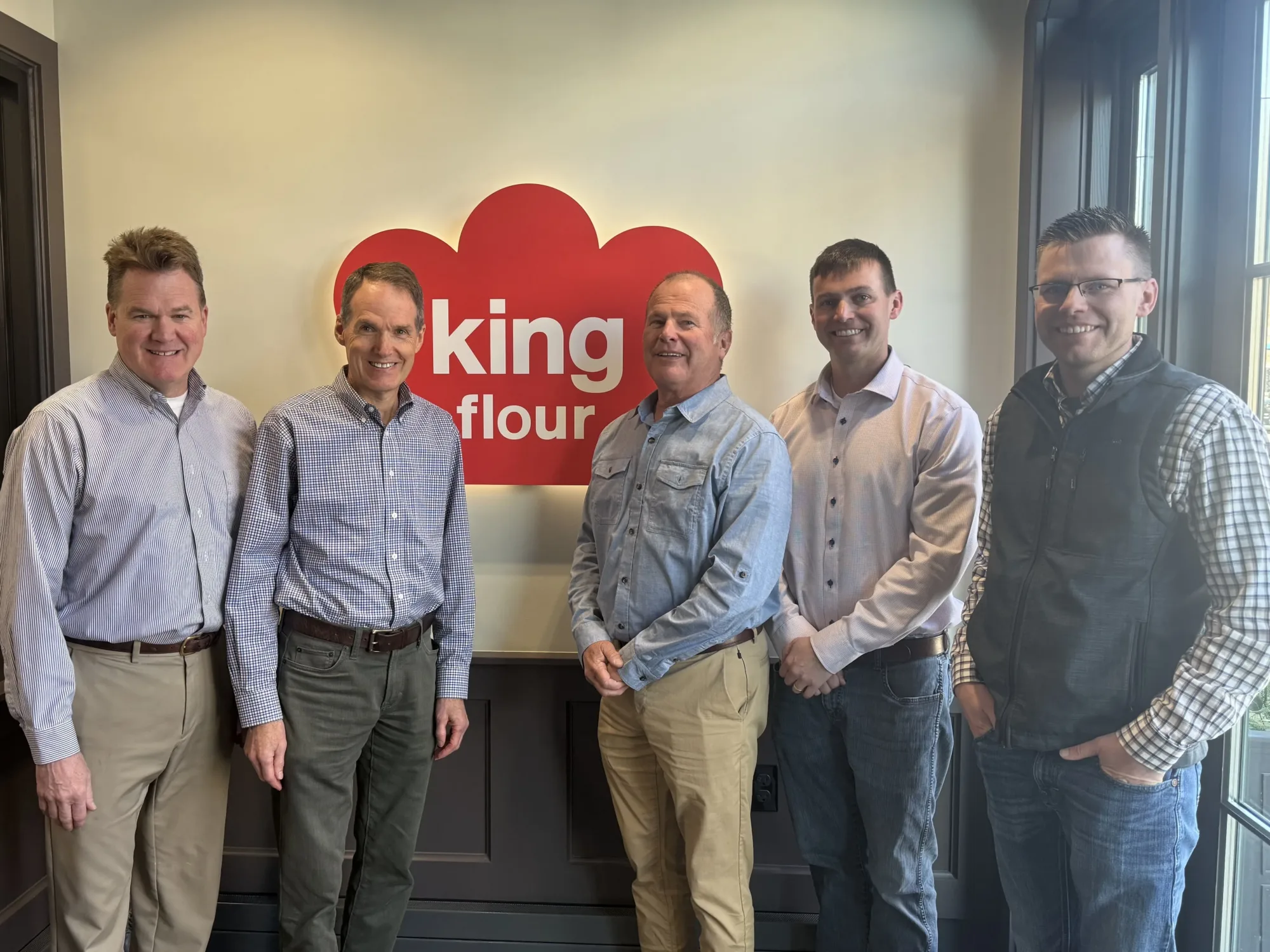
For more than a century, King Milling Company has turned American wheat into flour—and family legacy into lasting enterprise. Now led by the fifth generation of the Doyle family, the Lowell-based company remains one of the oldest continuously operating family-owned flour mills in the country.
Flour, Family, and Five Generations in Lowell
As King Milling celebrates its 135th anniversary, fifth-generation leaders Patrick and Regan Doyle—alongside fourth-generation family members Steve, Jim, and Brian Doyle—reflect on their family’s history, values, and vision for the future.
Today, it’s also the largest flour producer in Michigan—and ranks among the top 15 nationwide, with four mills producing over 2.5 million pounds of flour daily. That scale expanded significantly in 2024 with the completion of a six-floor mill and state-of-the-art grain handling facility, boosting output and positioning King Milling for the next era of growth.
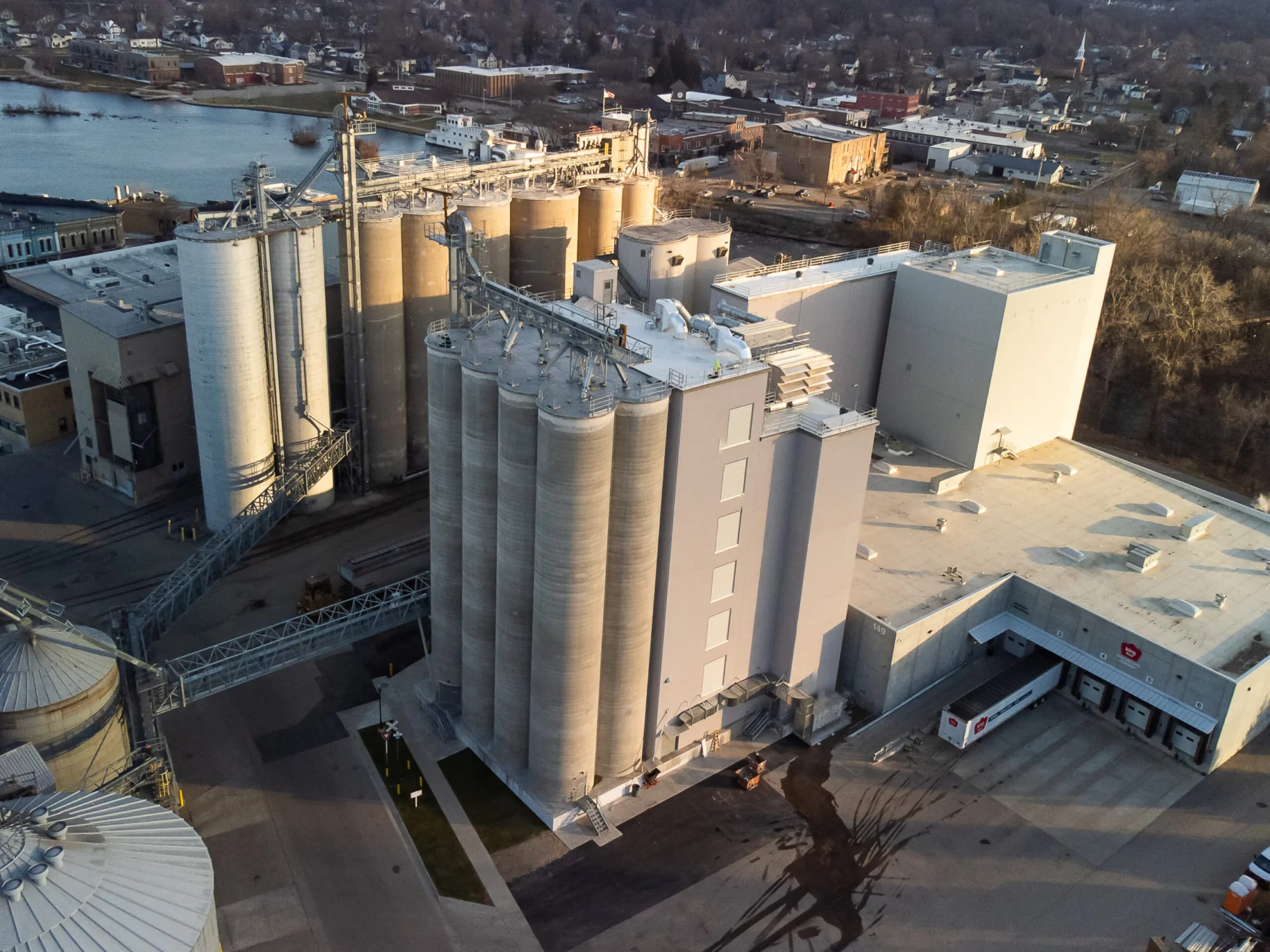
Roughly 40 percent of the company’s wheat—used to produce soft flour for pastries and cookies—is grown in Michigan. The rest, harder wheat varieties for bread and pizza dough, comes from states like Kansas and the Dakotas. While the grain travels far, the company itself has never strayed from the community where it began.
“Lowell’s home to us,” said Patrick Doyle, the company’s president. “We live here. We work here, and we’ve always tried to do things the right way—with our people, our community, and the customers we serve.”
From Fire to Flourishing
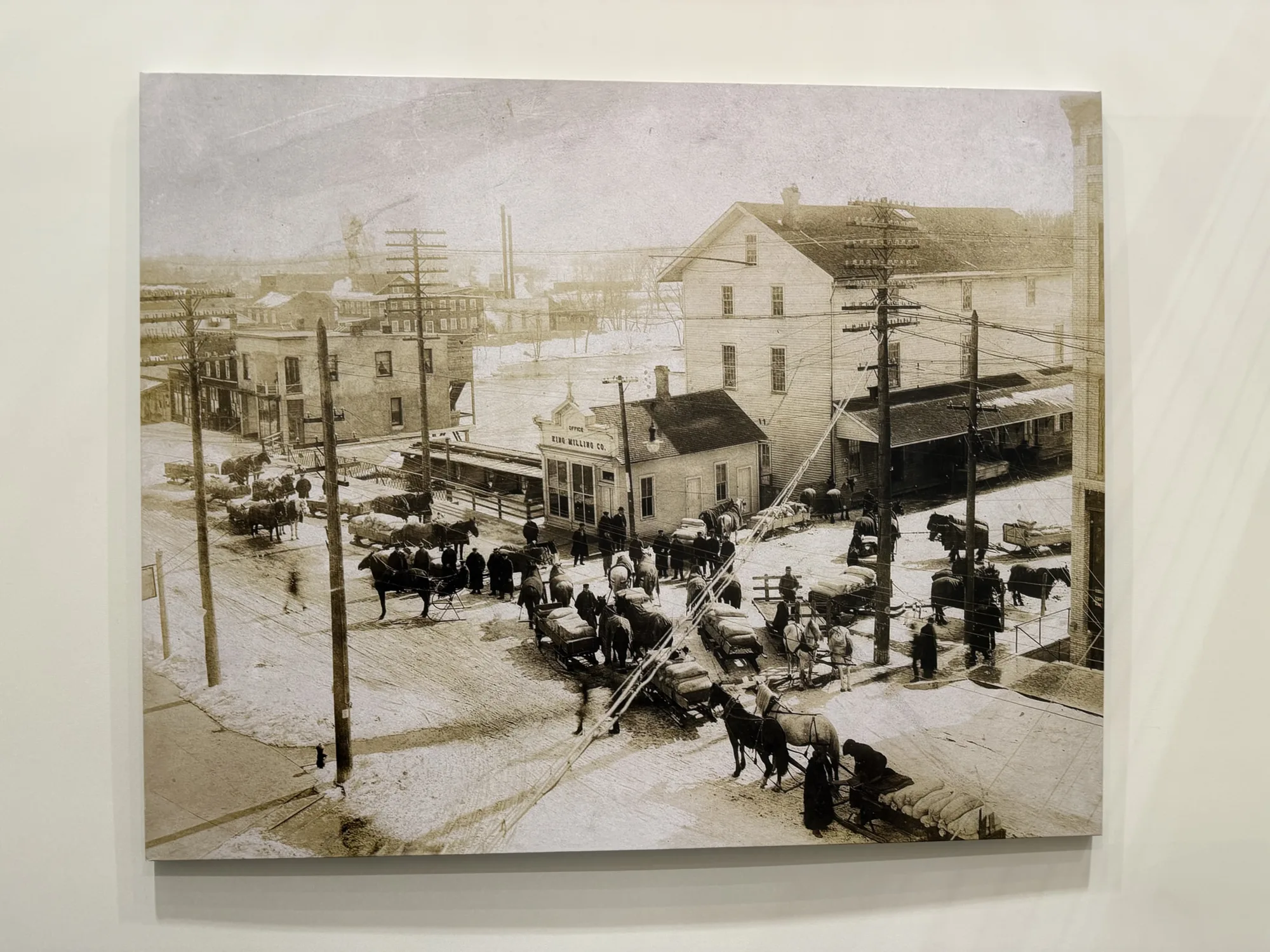
Founded in 1890, King Milling remains under family ownership for five generations. The business began with the acquisition of the bankrupt Superior Mill on the west side of Lowell by Francis King and partners, though the site itself had milled grain since the 1840s.
The Doyle family joined King Milling in 1900, and by the 1930s had taken full control. Steady modernization followed—even through crisis.
“We had a fire in the 1940s during World War II,” recalled Jim Doyle, former president and now chairman. “To rebuild, our grandfather had to take a train to the War Department in Washington, D.C., just to requisition enough steel—because it was all going into bullets.”
The new concrete mill opened in 1945. Ten days later, William Doyle—the driving force behind the rebuild—died suddenly. His sons, King and Mike, took over. King, then serving in the Pacific, came home on emergency leave to help stabilize the business.
“They could’ve walked away,” said Patrick Doyle. “But they pushed forward. That decision defined who we are.”
Progress with a Purpose
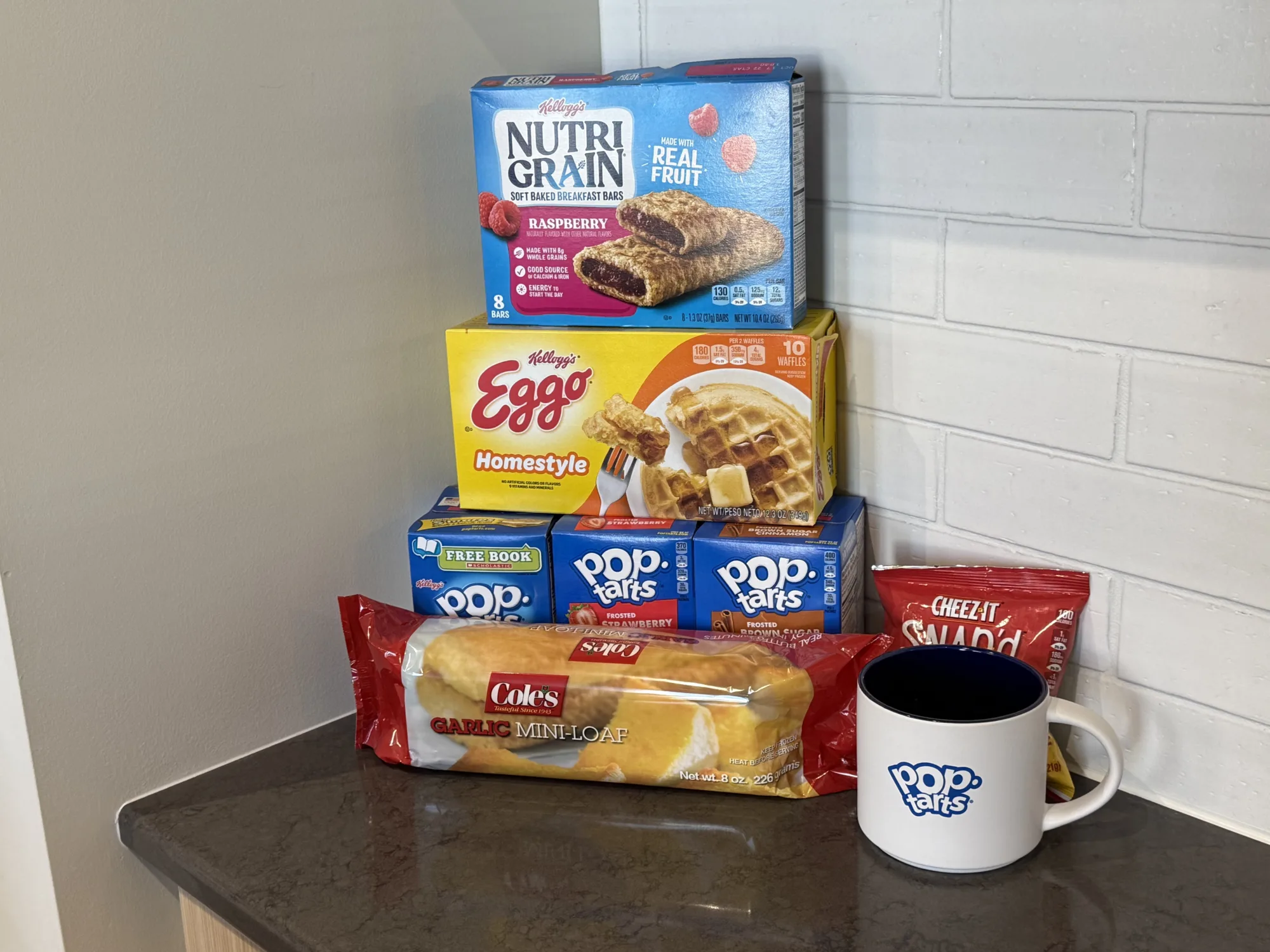
Progress at King Milling is not accidental. The company’s reputation for durability is built on foresight and discipline.
“We’ve never taken shortcuts,” said Patrick Doyle. “That’s just not how we do things.”
After the 1943 fire, William Doyle rebuilt the facility with the most advanced milling technology of its time. By the 1960s, King Milling was among the first in the U.S. to adopt pneumatic elevators. Automation followed in the 1980s, and the company introduced its proprietary Ceres® line, extending flour shelf life through enzyme control.
“From the beginning, we’ve looked for ways to do things better,” said Steve Doyle, senior vice president. “That mindset is what’s kept us competitive for 135 years.”
Innovation continued into 2023, when the company opened its newest facility, the D-Mill, increasing daily white flour capacity to 21,000 hundredweights (cwt), with total output—including whole wheat—reaching 25,000 cwt. As output increased, so did the need for speed and scale.
“We built a system to load 50,000 pounds of flour into a trailer in just five minutes,” said Patrick Doyle. “Other mills had done that—but we were the first to engineer a way to load multiple trailers from a single bin.”
Problem-solving at that level isn’t just about efficiency, it reflects a broader mindset.
“We’re always looking at what’s next—not just for us, but for our customers,” Patrick added. “That’s how we stay ahead.”
The Golden Rule

At King Milling, fairness, respect, and community involvement remain central to how the business is run.
“We try to follow the golden rule—treat people the way we want to be treated,” said Patrick.
King Milling supports numerous civic projects in Lowell—from sponsoring the rebuild of a major playground to volunteering time and resources at the local food pantry. Family members also serve on boards including the Rotary Club, Downtown Development Authority, and Historic District Commission.
“We’re integrated here,” said Steve. “We’re not just a business in Lowell—we’re part of the community”
That sense of connection runs deep inside the mill, too.
“We’re proud of our employees’ longevity,” said Steve Doyle. “We have 63 people here, and we know each one personally. They feel like family. Many have been with us a long time—which we hope reflects the respect we have for each of them.”
Advancing the Legacy
As King Milling charts its next century, the fifth generation is already carrying the load.
“We’re in the process of handing things off to the next generation,” said Jim Doyle. “They’re doing the heavy lifting now.”
That continuity is intentional. Patrick and Regan Doyle have worked across nearly every part of the business for more than two decades. Michael Doyle is doing the same. The handoff is deliberate, measured—and entirely on brand.
With its values intact, operations expanding, and a leadership pipeline firmly in place, King Milling isn’t just celebrating 135 years in business, it’s steadily shaping the future of the industry it helped define.
This interview has been edited for length and clarity. Email fba@fbagr.org if you are interested in exploring feature opportunities.
Family Business Alliance strives to help family businesses with the tools, resources, and connections to help businesses succeed. Learn more about our resources including Leading Forward, Succeeding in Succession, and Navigating Governance that help to advance family business in our community.
Capitol Hill Caucus Meeting Gives Family-Owned Business Leaders a Chance to Talk Directly with Policy Makers
Seven House Members Meet with Attendees to Hear Critical Issues affecting Family-Owned Businesses; New Research Revealed

Recently, I spent several days on Capitol Hill attending this year’s first event with members of the Congressional Family Business Caucus.
Over 70 family business leaders and others attended the gathering, along with seven Congressional House Members and all this as the country was on the verge of having no budget, the stock market shrinking, and new tariffs being added, or dropped, daily.
The Congressional Family Business Caucus was formed three years ago and is a bipartisan, educational Caucus intended to bring awareness to the issues facing family-owned businesses. in the Michigan, and throughout the country.
This meeting was focused on women-owned family businesses and featured eight women-owned family business owners, as well as presentations on latest research from our Family Enterprise USA Annual Family Business Survey, and new consumer attitude research from our chief communications strategist and pollster, Dr. Frank Luntz.
The seven House members who stopped by to speak with, or greet, the attendees were Rep. Carol Miller (R-WV), Stacey Plaskett, (D-VI-AL), Brad Sherman, (D-CA), and Brad Schneider, (D-Ill). The others who attended and listened to family-owned business stories were Rep. Chuck Fleischmann (R-TN), Rep. Mariannette Miller-Meeks (R-IA), Rep. Pete Stauber (R-MN).
Last year, the Caucus was co-chaired by Reps. Jodey Arrington (R-Texas), Brad Schneider (D-Ill.), Claudia Tenney (R-N.Y.) and Henry Cuellar (D-Texas). It has approximately 50 members and, with each new Congress it is hopeful that co-chairs will be announced soon.
This meeting was designed to educate members of Congress on the strength of women-owned family businesses, and the special challenges they face.
Women-owned businesses represent nearly 40% of all U.S. businesses — more than 14 million businesses in total – and account for $2.7 trillion in revenue, according to Wells Fargo Bank’s 2024 “Impact of Women-Owned Business Report.”
The women-owned family businesses that spoke at the meeting started with Debbie McKee, the namesake of Little Debbie Cakes, based in Chattanooga, Tenn. She was followed by Kimberly Smith, President of Pipeline Development Company, Strongsville, Ohio, Angela Simmons, owner and manager of ABS Legacy Partners, and Policy and Taxation Group Board member, and Rosana Biondo, President, Mark One, in Kansas City.
These speakers were followed by Cheryl Osborn, founder of Casco Contractors, Irvine, Calif., Meghan Hanna, Evolve Wellness, based in Orange County, Calif., Bridget Herdman, Herdman Architecture & Design, Corona del Mar, Calif., and Junette McCarthy of McCarthy Wealth, Newport Beach, Calif.
Others who spoke at the event were Ken Monroe, President of Holt of California, Stockton, California, and Robert Mancuso, Chief Executive Officer, Capri Capital Partners, Palm Beach, Florida.
Off and Running
One of the main features of the Congressional Family Business Caucus is to get a reading on the current political “state of play” on Capitol Hill and then to meet with specific House Members in their chambers.
The starting point in understanding how Congress works is to get to know the new Members of Congress, many of which were not in office when the 2017 Tax Cuts and Jobs Act was passed.
Russ Sullivan and Mark Warren of the law and government relations firm, Brownstein, detailed the new players in town, while Caren Street and Michael Hawthorne, of Squire Patton Boggs, another top law and government relations firm, discussed how best to deliver key family-owned business messages across to their House Members.
New Family-owned Business Research
Attendees were also privy to preliminary research results from our annual national study of family businesses.
The survey once again showed family-owned businesses, like those in Michigan, survive better than most businesses. Results showed that 81% have been in business for 20 years or more, and 31% have been in business for between 50 and 100 years.
In addition, 90% of family-owned businesses pay their employees above average or average wages and benefits, with 47% paying above average.
When it comes to the critical tax policies affecting America’s family-owned businesses, the most concern centers on high income taxes.
The survey found 47% mentioned personal income taxes as their number one most important issue or concern. This is a 15% jump from our survey last year, which had 41% of respondents saying personal income tax rates were a top concern.
The second most important issue was the Estate, or Death, Tax, which 19% of respondents said was their number one worry, the same as last year.
The concern over Capital Gains remained steady at 12% and was ranked third as a top concern. Last year, the survey found 13% mentioning this as a most important issue.
High Trust Factor
In another survey, 1,000 consumers were polled for Family Enterprise USA by our communications expert, Dr. Frank Luntz.
Highlights from this report revealed family-owned businesses are 78% more trusted by consumers than regular corporations.
The survey also found the American Dream lives on with family-owned businesses.
The Luntz survey found that 91% of respondents believe family-owned businesses are what’s great about America, that is, “the idea that you can start something from nothing and pass it on to the next generation.”
The most important finding in this survey might be that American’s agree that it is “unfair that family-owned businesses pay a higher tax rate than regular corporations.”
When asked this question, 84% agreed with the premise that “family-owned businesses should not have to pay more in taxes than corporations.”
To those who attended this first of three meetings on Capitol Hill, the one clear message was: you must engage with your legislative leaders on a personal, one-to-one basis if you want to be heard.
There is nothing stronger than looking your representative in the eye, in their office, on their turf, and telling them what is important to you, the taxpayer, and a family-owned business leader in their district.
They will listen.
Pat Soldano, President of Family Enterprise USA, and the Policy Taxation Group, both are non-partisan organizations advocating for family enterprises of all sizes. Both groups are organizers of the Congressional Family Business Caucus and of the Family Enterprise USA Annual Family Business Survey.
Family Business Alliance strives to help family businesses with the tools, resources, and connections to help businesses succeed. Learn more about our resources including Leading Forward, Succeeding in Succession, and Navigating Governance that help to advance family business in our community.
Subscribe
"*" indicates required fields
A Legacy of Family, Fortitude, and Forward Thinking at Swisslane Farms
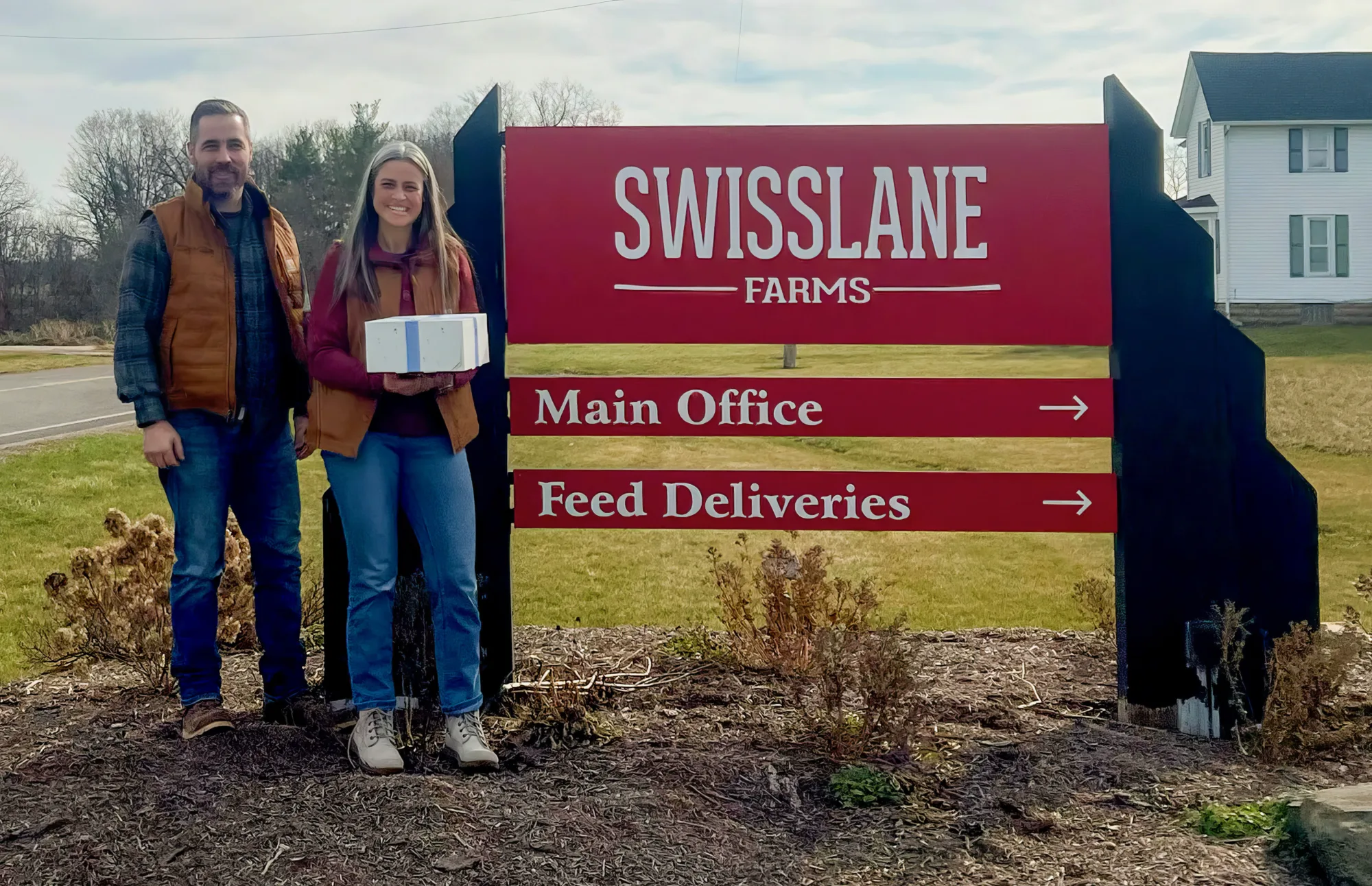
As Swisslane Farms celebrates its 110th anniversary, we sat down with fourth generation cousins Annie Link and Matthew Oesch. Along with Tom Oesch Jr., Matt and Annie are steering the family business into its next century with a focus on innovation, efficiency, and long-term sustainability.
“We want to get to 200 years, at least,” Annie says. “It’s about honoring the past—but not standing still.”
A Century-Long Foundation
To understand where Swisslane is going, you have to know where it began.
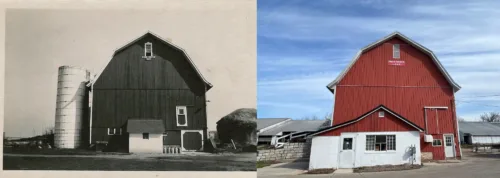
In 1904, 16-year-old Fredrick Oesch, an orphaned immigrant with a dream, left Switzerland for America with a plan: own land and build something lasting. He started as a farmhand at the Wingeier family farm in Alto, Michigan. In 1915, he married Lucy Wingeier, a local farmer’s daughter, and bought 91 acres of land that became the foundation of Swisslane Farms.
By the 1930s, the operation had already traded hand milking for vacuum-powered pipeline systems—an early sign that innovation would always be part of the business model.
Fredrick’s son Joe stayed on, eventually taking over and guiding the farm through decades of change. When Joe’s sons—Fred, Jeff, and Tom—stepped into leadership, the family formalized a partnership in 1981. Amid the 1980s farm crisis, they hand-built a 12-unit milking parlor from salvaged parts—an investment that kept the business afloat. By 1999, a major herd expansion pushed Swisslane past 1,000 cows and into long-term economic viability.
In time, Tom’s sons—Tom Jr. and Matt—and Fred’s daughter, Annie—representing the farm’s fourth generation—stepped into leadership, each taking on defined roles. Annie leads human resources and public engagement, Matt, as CEO, manages efficiency and profitability, and Tom, as Visionary, drives innovation and long-term goals.
Modern Milking, Timeless Values
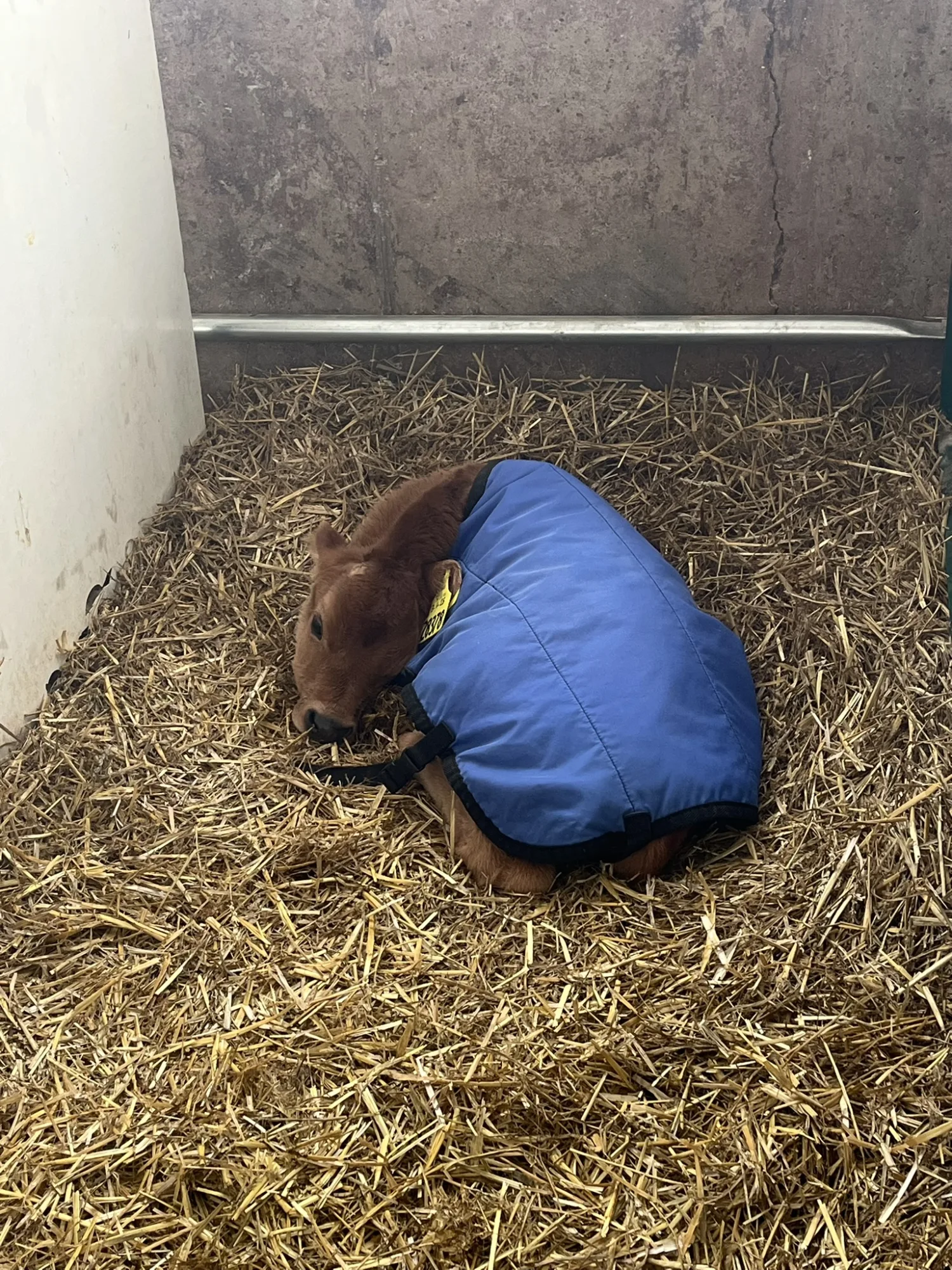
Today, their total operation milks roughly 5,500 cows and raises 4,400 heifers as replacements, while farming 5,000 acres of corn and soybeans to feed the herd. The operation includes four milking centers across Alto and Battle Creek and a team of 86 employees—making it a large, complex business by any measure.
“Our goal is to be 10,000 cows by 2032,” Matt says. “It’s about sustainability and using scale to lower costs of production while protecting the environment.”
More than 1,500 cows file into the milking parlor—not once, but three times a day.
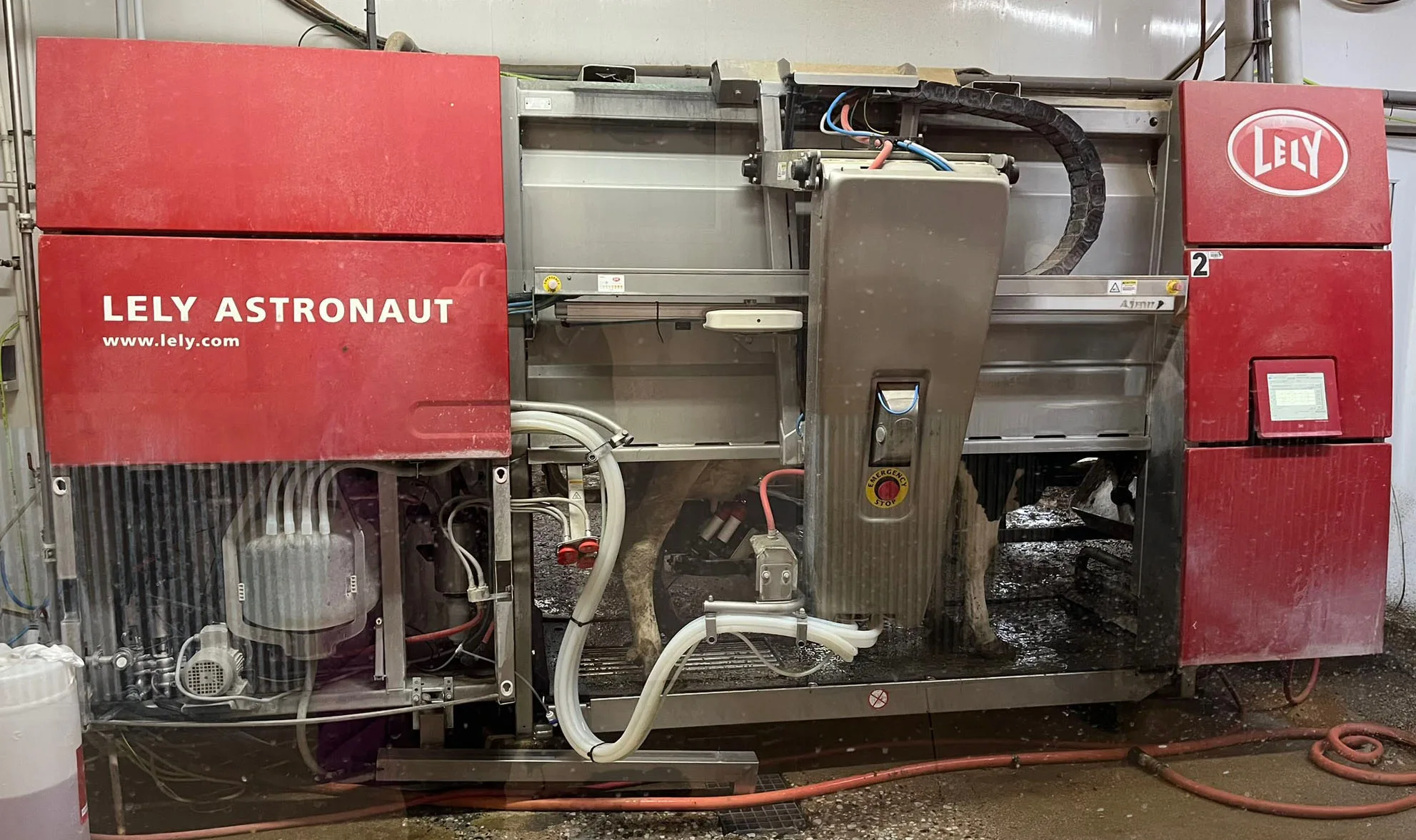
As fourth-generation leaders, Annie, Matt, and Tom inherited more than a farm—they took on the challenge of modernizing a legacy. In 2010, Swisslane invested in robotic milking, a leap that redefined herd management and labor models. The technology offered key insights but proved costly and tough to scale. The farm has since stepped back—but sees future potential as the tech and economics catch up.
The robotics era marked more than a shift in equipment—it sparked a deeper conversation revisiting the past and exploring its future. Matt helped distill what mattered most: six core values that now guide the business. “It gives us a roadmap,” Annie says.
Swisslane Farms’ Core Values
God-honoring conduct
Thinking light years ahead
Focus on the cows
Turning a nickel into a dime
Making hay while the sun shines
Becoming productive people
Those values were tested early. In 2015, a prolonged dairy slump forced Swisslane to rethink nearly every part of the business. “It was our own version of the ’80s,” Matt said. “We had to dig in and rethink everything.”
Today, those principles shape hiring, onboarding, accountability, and long-term planning. “We try to make them easy to remember and apply every day,” Annie says. “Each one has a hero and a story behind it.”
By 2021, Swisslane made a bold expansion into Battle Creek, acquiring leased facilities from retiring farmers without successors. The move added complexity and herd size—and underscored the importance of strong systems and culture to support growth.
The Cow is King
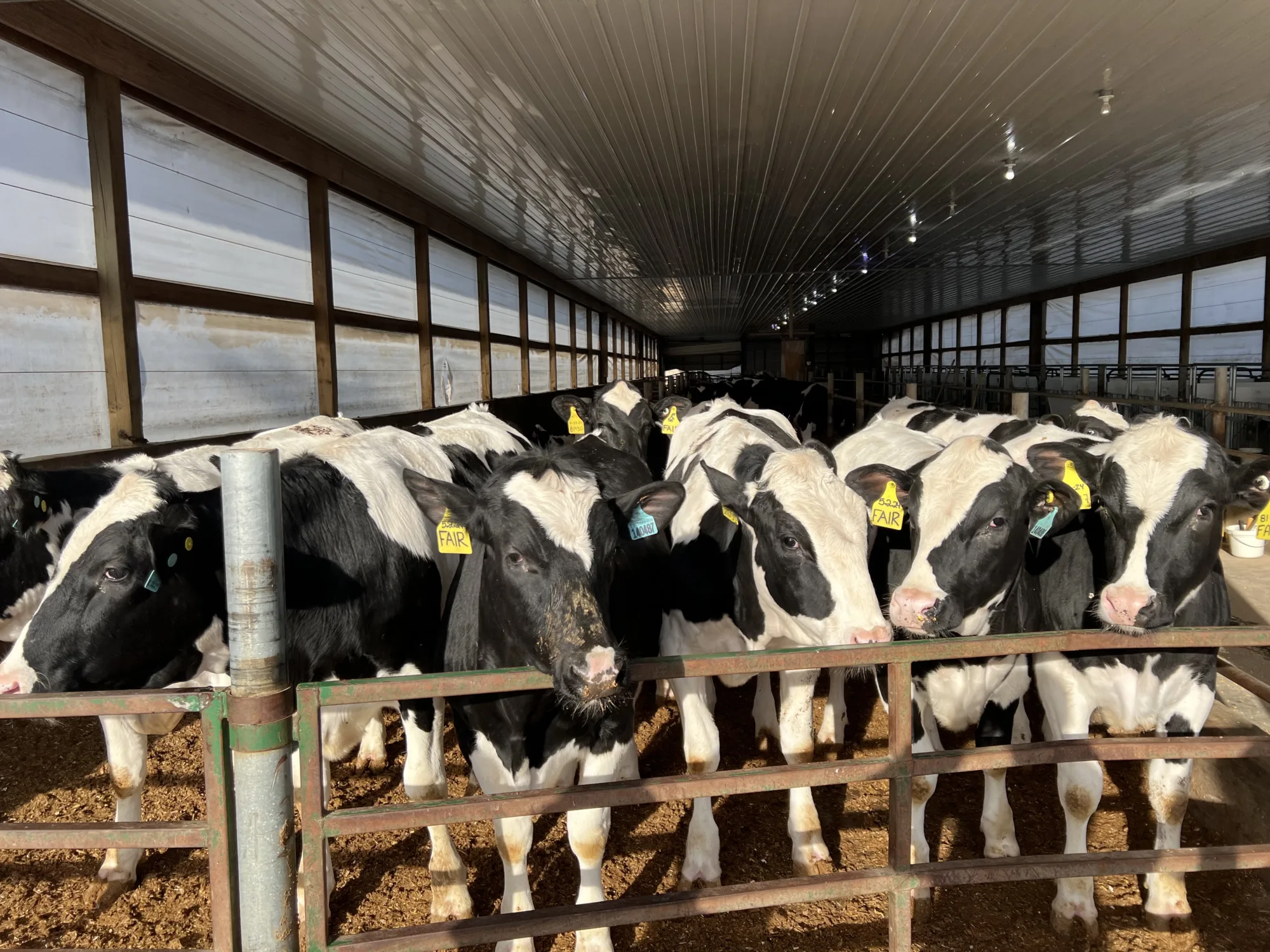
“Cows are my favorite animal,” Annie says.
“They take things we can’t eat—byproducts like corn cobs or cottonseed—and turn them into milk, cheese, and ice cream. They give us organic fertilizer, make renewable energy, and at the end of their lives, they still enter the food system as beef. They just keep on giving.”
Swisslane cows live in free-style barns where they move freely, access fresh feed and water, and rest as needed. A consistent, low-stress environment is central to how the farm operates. “They need routine,” Annie says. “Anything that causes stress affects their health and production, so we work hard to keep things calm and predictable.”
Each cow wears an RFID tag that tracks production, behavior, and health in real time. Flow meters on the milking units monitor output, helping staff spot issues early and optimize performance.
Sustainable Farming
At Swisslane Farms, sustainability is baked into the growth strategy. A major initiative underway: a 3-million-gallon anaerobic digester in Battle Creek, built in partnership with Consumers Energy. Instead of releasing methane from open lagoons, the system captures and converts it—dramatically reducing greenhouse gas emissions.
“The system captures methane from manure, purifies it, and feeds it into the natural gas pipeline,” Matt says. “It’s enough to power over 2,000 homes—and delivers both environmental impact and market value.”
More Than a Farm

Swisslane isn’t just a business—it’s home turf for nearly 60 family members living within five miles of the farm. The roots here run deep.
Dairy Discovery, a nonprofit launched in 2006, brings thousands through its barns each year for tours, camps, and hands-on lessons in how milk is produced.
“Our mission is education,” Matt says. “We want people to smell the farm, see the cows being milked, touch the calves—so they understand what modern agriculture really looks like.”
For Annie, it’s about narrowing the farm-to-table gap and fostering greater appreciation for the food on every plate.
“There are little miracles that happen here every day. It’s easy to overlook that when you walk into the grocery store—you take it for granted” says Annie.
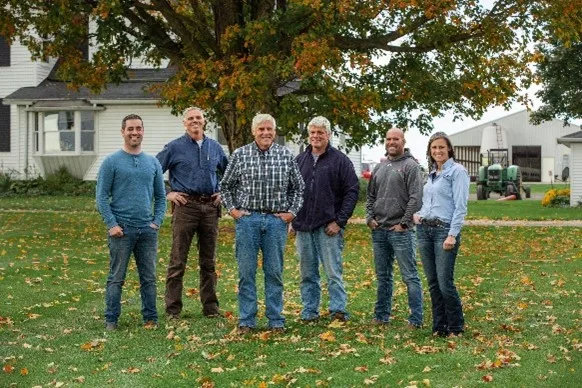
That sense of purpose isn’t just for visitors—it’s shaping Swisslane’s next generation. Through a NextGen workforce program and regular family meetings, seven fifth-generation relatives are already on the payroll, gaining early exposure to how the business runs—and how they might lead it in the future.
“It’s been really fun to see the younger ones get excited about working on the farm,” Annie says. “We have some great kids ready to step up and continue the legacy.”
As Swisslane Farms marks over a century in business, its story is one of evolution with intention—rooted in family and driven by resilience. The next chapter isn’t just coming—it’s already in motion.
This interview has been edited for length and clarity. Email fba@fbagr.org if you are interested in exploring feature opportunities.
Family Business Alliance strives to help family businesses with the tools, resources, and connections to help businesses succeed. Learn more about our resources including Leading Forward, Succeeding in Succession, and Navigating Governance that help to advance family business in our community.
Grand Rapids Family Businesses Get Down to Work as New Year Offers Optimism, Skepticism, and Hope for a Strong 2025
The New Year is shaping up to be one of getting down to business fast, and alleviating worry, especially when it comes to tax and economic policies for family businesses in the Grand Rapids area.
Recently, I spoke with several of the staff members and leaders of the House Ways and Means Committee “Tax Teams.” I asked them what their first one hundred days looked like, specifically when it comes to tax legislation, an issue on every Grand Rapids family business leader’s mind.
I spoke with senior staff members (the people who do the nitty-gritty tax writing work) for Rep. Vern Buchanan (R-Fl), Chair of the “American Manufacturing” Tax Team, Rep. Darin LaHood (R-IL), Chair of the “American Workforce” Tax Team, Rep. Mike Kelly (R-PA), Chair of the “Community Development” Tax Team, Rep. Adrian Smith (R-Neb), Chair of “Rural America” Tax Team, and Rep. Lloyd Smucker (R-PA), Chair of the “Main Street” Tax Team, among others.
Their messages, and priorities, were clear: “we need a tax code to help family businesses operate with certainty and permanency.”
This was good to hear, considering the specific issues that came up focused on items like lower personal taxes, the extension of the 199A, and restoring R&D expensing. All are on board, it seems now, with keeping these provisions. More importantly, they want to make them permanent.
Stability in the tax code is the most important factor they are weighing, but they also understand keenly that by extending much of the Tax Cut and Jobs Act (TCJA) the country runs the risk of increasing the national debt by over $4 trillion.
This is an unenviable balancing act we will be watching closely, to see how it will affect family businesses in Grand Rapids.
One key issue is education, that is, educating new and old Congress members on the importance of family businesses to the U.S. economy. This is what we do at Family Enterprise USA.
Another big challenge is that only a small number of the new Congress members were in office in 2017, when the TCJA was passed.
We need to educate these new members fast, not only on the helpful provisions in TCJA, but on the size and scope of family businesses in general.
If you don’t know, according to research, America’s multi-generational family-owned businesses contribute $7.7 trillion annually to the U.S. gross domestic product. Family businesses are the largest private employers in the country, accounting for 83.3 million jobs, or 59 percent of the country’s private workforce, the research shows.
In our first 100 days, this is the message we will get out, especially during the year’s first Congressional Family Business Caucus meeting to be held March 11, on Capitol Hill.
Getting The Word Out
At Family Enterprise USA, we’ve seen a year of significant gains in getting our messages out on Capitol Hill and letting our policy makers know about the importance of the economic engine that are family businesses in America, especially those family businesses in Grand Rapids.
The movement of economic and tax policies is often maddeningly slow and challenging in Washington, D.C. Educating our legislators on the importance of family businesses is a multi-year process spread across multiple administrations and political parties.
It takes time, and a lot of work.
Despite these barriers, we’ve seen significant progress and media attention to such important subjects as the continuation of favorable provisions in the Tax Cuts and Jobs Act, restoring R&D expensing and bonus depreciation, and adding new members to the Congressional Family Business Caucus.
Our goals in 2024, as in previous years, were to educate our lawmakers on Capitol Hill on the many harmful proposals under consideration by Congress, by the old and new Administrations, and by our regulatory agencies.
Actions Speak Volumes
Our actions this year and next year will continue to hammer away on these issues. If we don’t, no one else will. We are your voice on Capitol Hill.
Here are just a few of the key issues we worked on this year and will continue to work on in 2025.
- Educate existing and new legislators on Capitol Hill on the size and power of America’s largest private employer, Family Business
- Use the Congressional Family Business Caucus as a platform for education, dialogue, and one-to-one meetings with key policy writers
- Get the message out encouraging Congress to extend, retain, and improve key portions of the Tax Cut and Jobs Act (TCJA)
- Promote the Restoration of the R&D Expensing, Bonus Depreciation, and Other Pro-Business Tax Policies
- Secure an Estate Tax Rate reduction and/or prevent a reduction in the Lifetime Exemption
- Avoid the Elimination of Step-Up in Basis
- Stop any movement to Eliminating Valuation Discounts or limitations on Valuation Rules for Estate Tax Purposes
- Curtail and lessen taxes on Passthrough Business Profits (199A)
- Prevent an increase in the Top Income Tax Rate
- Avoid an increase in the Top Capital Gains Tax Rate
- Implementation of a Surtax on Income, Mark-to-Market Regime, and/or Other Taxes on Successful Individuals and Wealth
- Stop Elimination or Limitations on Grantor Trusts and/or GRATS
- Prevent Limitations on Retirement Accounts and/or Elimination of Holding Private Stock in IRA’s
- Avoid elimination of Like Kind Exchanges
- Work with Congress to introduce and add co-sponsors for the Estate Tax Rate Reduction Act
- Support the work of the Family Business Estate Tax Coalition and the estate tax repeal bill
- Grow the Congressional Family Business Caucus and continue to work with Congress to hold 3 meetings a year.
We look forward to reporting back to you on our progress throughout 2025. It should be an interesting year for family businesses in Grand Rapids, and for all family businesses in America.
Pat Soldano, President of Family Enterprise USA, and the Policy Taxation Group, both are non-partisan organizations advocating for family enterprises of all sizes. Both groups are organizers of the Congressional Family Business Caucus and of the Family Enterprise USA Annual Family Business Survey.
Family Business Alliance strives to help family businesses with the tools, resources, and connections to help businesses succeed. Learn more about our resources including Leading Forward, Succeeding in Succession, and Navigating Governance that help to advance family business in our community.
Mary Cline Promoted to Director of Membership
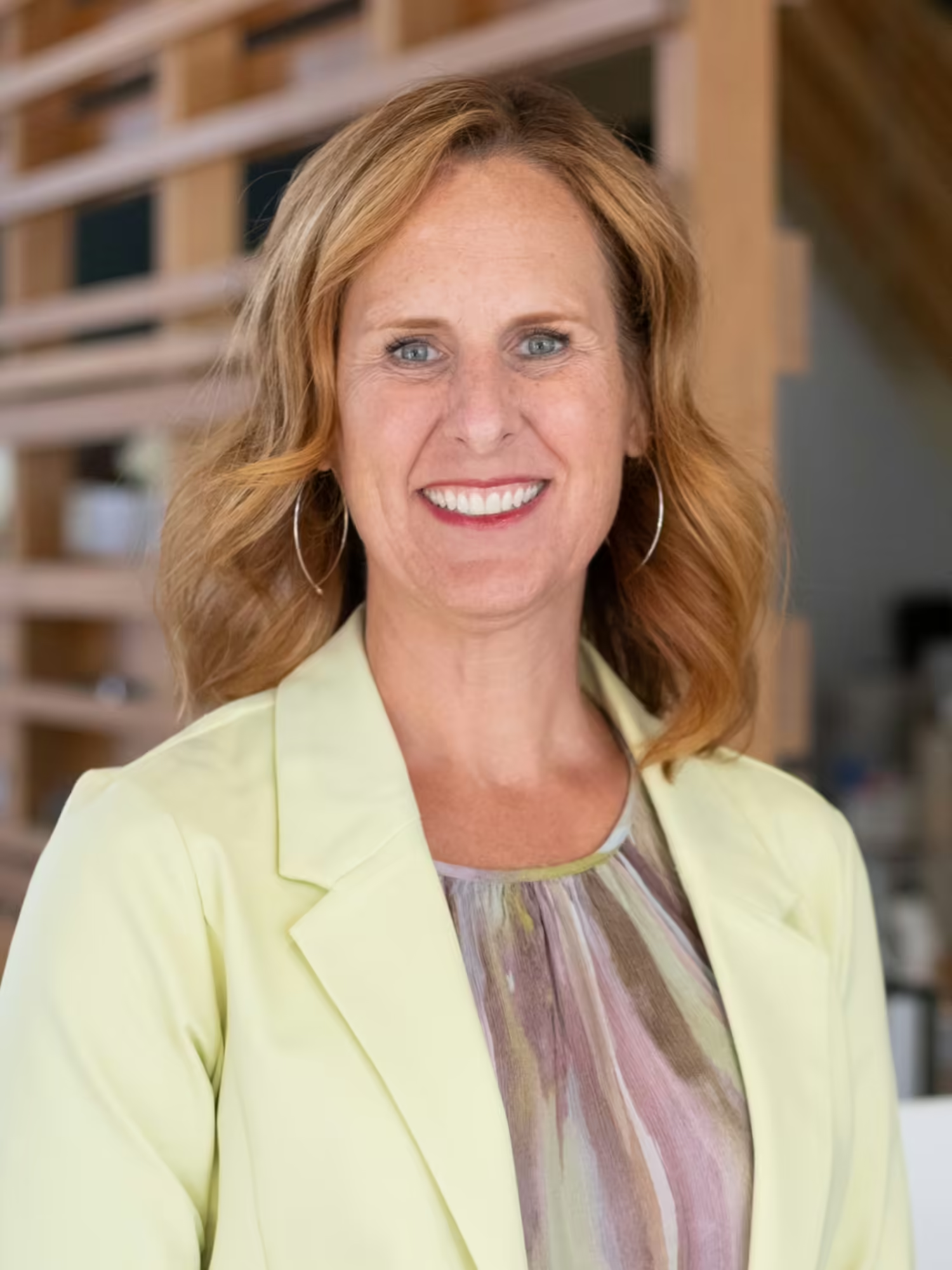
Family Business Alliance is proud to announce that Mary Cline has been promoted to Director of Membership.
Mary joined Family Business Alliance in March 2023. Since then, she has expanded connections and educational opportunities of family run organizations in West Michigan. Through her leadership and advocacy, she has played a pivotal role in increasing membership and driving current membership engagement in programs and resources.
“Mary is a true advocate for family run organizations in our community,” stated Robin Burns, Director of Family Business Alliance. “Her passionate belief in our mission, continues to create an impact in our community. As a member of our team, she has engaged over 50 new members and maintained a member retention rate of 90%,” Burns continued.
As Director, Mary will continue to oversee and develop membership growth, engage the current membership in programs and resources, and develop strategic partnerships within the community.
Prior to joining Family Business Alliance, Mary’s professional experience included relationship development positions with Samaritas and the Crohn’s and Colitis Foundation. She currently serves on the Fund Development Committee for Children’s Advocacy Center of Kent County.
Family Business Alliance strives to help family businesses with the tools, resources, and connections to help businesses succeed. Learn more about our resources including Leading Forward, Succeeding in Succession, and Navigating Governance that help to advance family business in our community.
A Century of Family and Community: The Story of Eikenhout Inc.
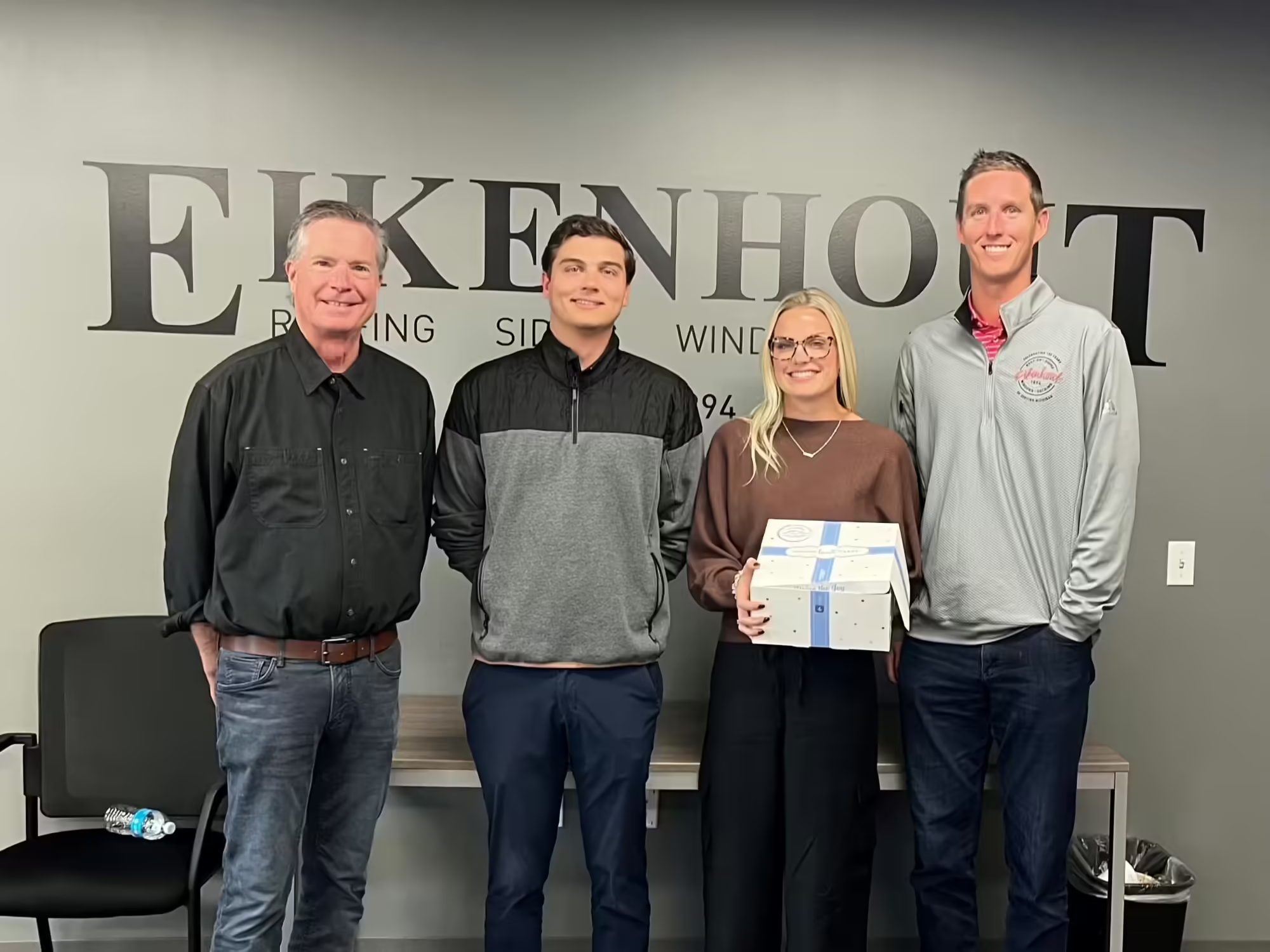
Founded in 1894, Eikenhout Inc. navigated over a century of industry changes, growing from a small roofing supply store into Michigan’s last independent distributor of exterior building materials. Through the voices of three family members; Greg Schierbeek (President and CEO), Leah Weesies (Marketing Coordinator), and Alex Schierbeek (Director of Finance)—we get to look into the heart of this multigenerational business.
From Hot Tar to Building Supplies

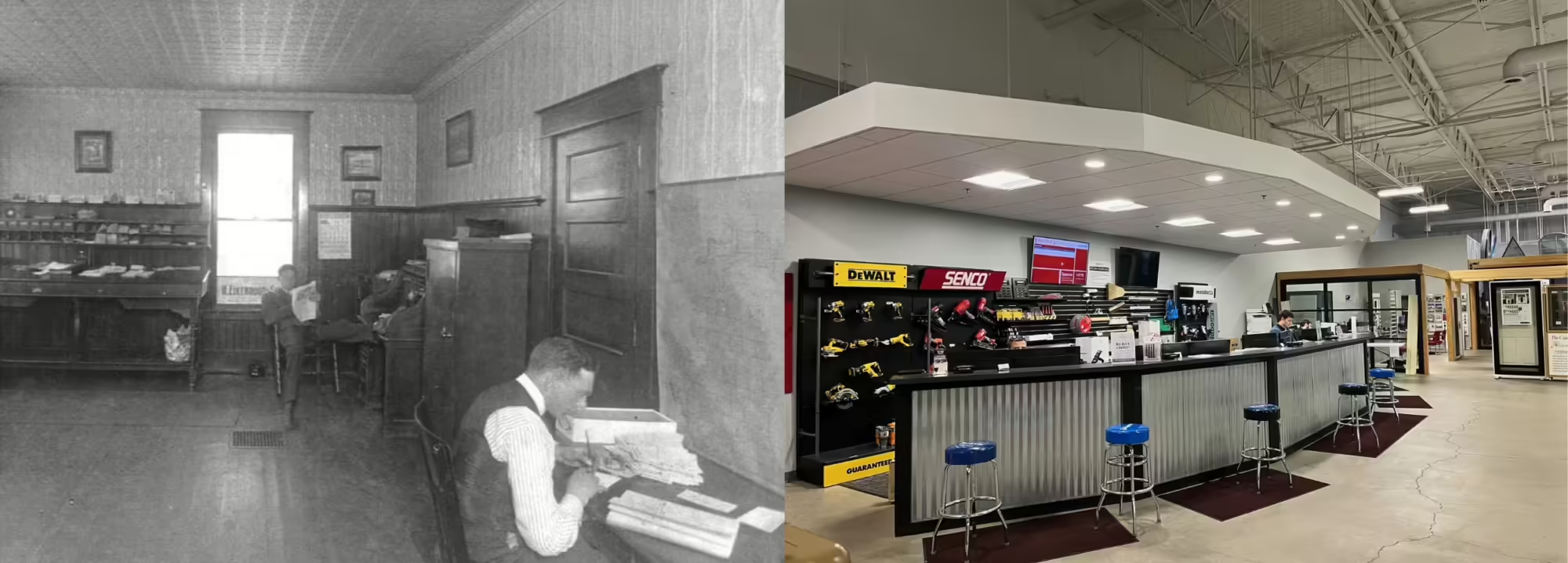
Eikenhout’s roots trace back to Hendrik Eikenhout, a hot tar roofer in Grand Rapids who started selling roofing supplies and tools to other roofers. The company quickly evolved under the leadership of Hendrik’s son, John, who shifted focus from installation to distribution.
“Did you know that the asphalt roofing shingle was first made in Grand Rapids?” asked Greg Schierbeek, current president and second-generation family leader. The Eikenhout family began selling these products and moved the company to its long-standing location in the heart of Grand Rapids on Wealthy Street, eventually expanding the site across the street as well.
The family’s legacy of leadership extended through John’s widow, Nelly, who took over after his death in 1940. She managed the company for over a decade before selling shares to Walt Kok and Pete Albers, longtime employees who brought stability during a transformative period. Greg’s own father, Henry Schierbeek, joined the company in 1959 as an office clerk and eventually was part of a group of local businessmen that purchased it in 1971.
Adapting to a Changing Landscape
While Eikenhout doesn’t manufacture products, their ability to quickly adapt to market trends sets them apart. “We’ve been quicker to embrace innovations in exterior cladding and decking products than our competitors,” Greg said. During the pandemic, for example, the surge in demand for outdoor living spaces bolstered their decking business—a trend that has continued post-pandemic.
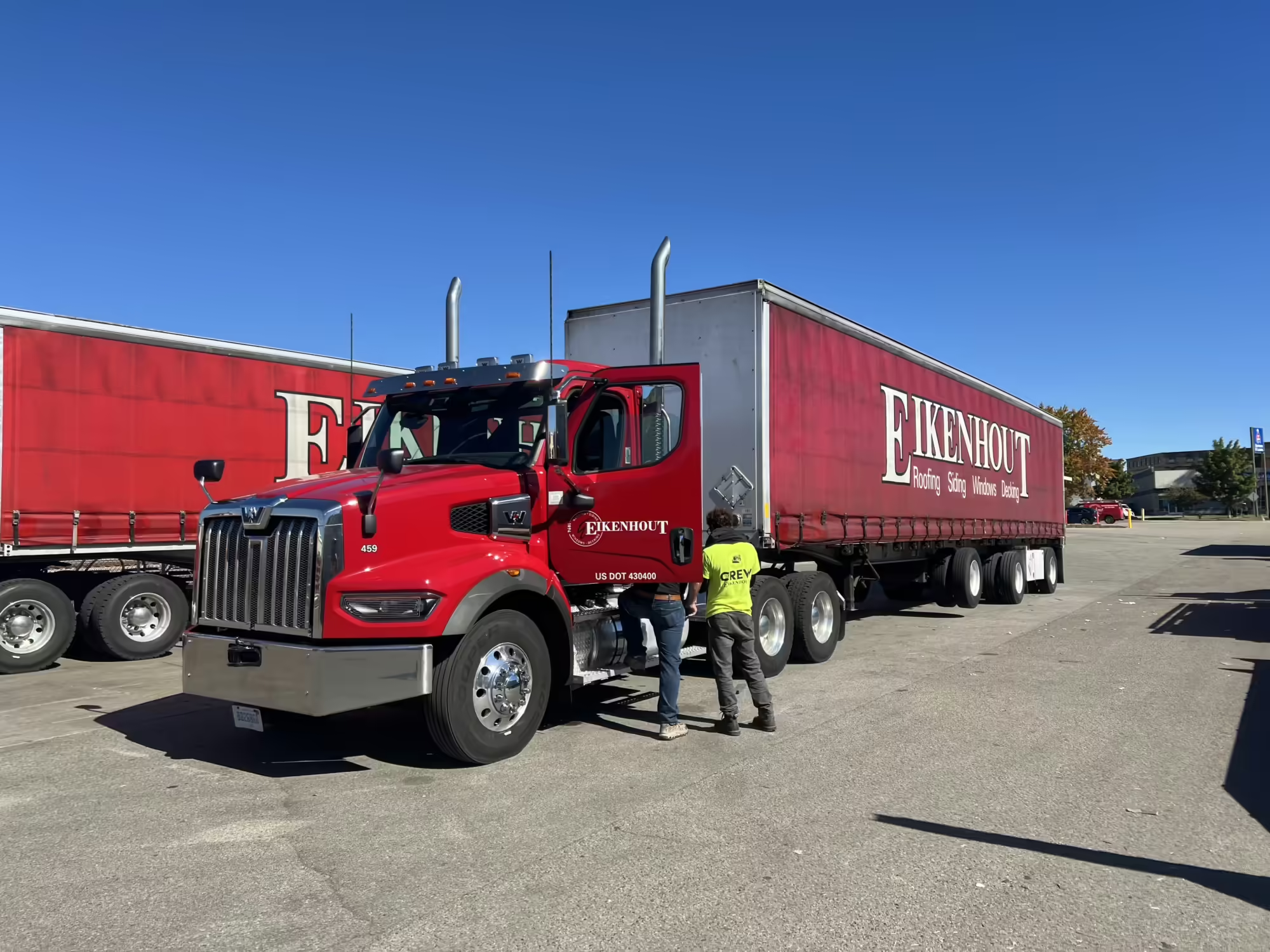
As the only remaining Michigan-owned distributor of its kind, Eikenhout stands apart in an industry dominated by national chains and private equity. Their independence allows them to remain deeply connected to their customers and communities. Leah emphasized, “We’re able to do more for our customers—whether it’s hosting events, handing out swag, or investing in local projects.”
Growing Up Eikenhout
For the Schierbeek family, Eikenhout has always been a part of their lives. All three have memories of growing up around the business, performing odd jobs long before stepping into full-time roles. “My dad brought me here on Saturdays when I was 12 to make sure the coffee pot was full, sweep floors, and clean toilets,” Greg recounted with a smile. “I’ve been here full-time since 1980.”
Leah remembers they were too young to use power tools, “so we used hand clippers to weed whip,” she said. “My cousins and I would end up painting the warehouse—and sometimes each other.”
Alex, who now helps oversee the company’s finances, also started on the ground level of operations. “In high-school and college, I weeded, swept warehouses, and eventually drove trucks during the summers” he said. Leah joined full-time during the pandemic in 2020 after a career in commercial banking. Her brother, Jackson, recently stepped in as an estimator, continuing the family’s involvement.
Pride in Family and Reputation

When asked what they’re most proud of, the Schierbeeks pointed to the lasting legacy of the business and its impact on the community. “I love seeing our trucks out on the road and hearing from friends who spot them all over the state,” Leah said. For Alex, it’s the stories from longtime customers. “They often share memories about my grandpa or Greg, and it’s always positive. It makes me feel good about who I work for.”
Greg highlighted the relationships he’s built over decades. “I’ve been fortunate to work with my father and now with Leah, Alex, and Jackson. We’ve had phenomenal employees, we had a purchasing agent retire two weeks ago who had been here for 36 years. That’s something I’m incredibly grateful for.”
Family Values at the Core
The familial atmosphere extends beyond the Schierbeek family to the broader company culture. “We’re a close family, and that translates into the office,” Alex said. “Customers know they can walk down the hallway and talk to Greg directly. It’s not like calling a corporate hotline.” With 10 locations, 186 employees, and a six-acre compound in Grand Rapids, Eikenhout Inc. has grown significantly over the years, with Leah describing it as “a decent-sized company that still feels like a family.”
Greg, reflecting on the business’s longevity, credited the foundational values instilled by his predecessors. “My father never officially retired, and his presence shaped how we operate.”
Leah added, “When I started just four years ago, he was 87, and he was here almost every day. He’d come in just to have a cup of coffee, walk around, call his friends, and make a tee time—that’s what he did forever.”
Greg reflected on the legacy that his father left behind, saying, “We have that legacy where so many people knew him. And, you know, we’ve always just really tried to treat people fairly.”
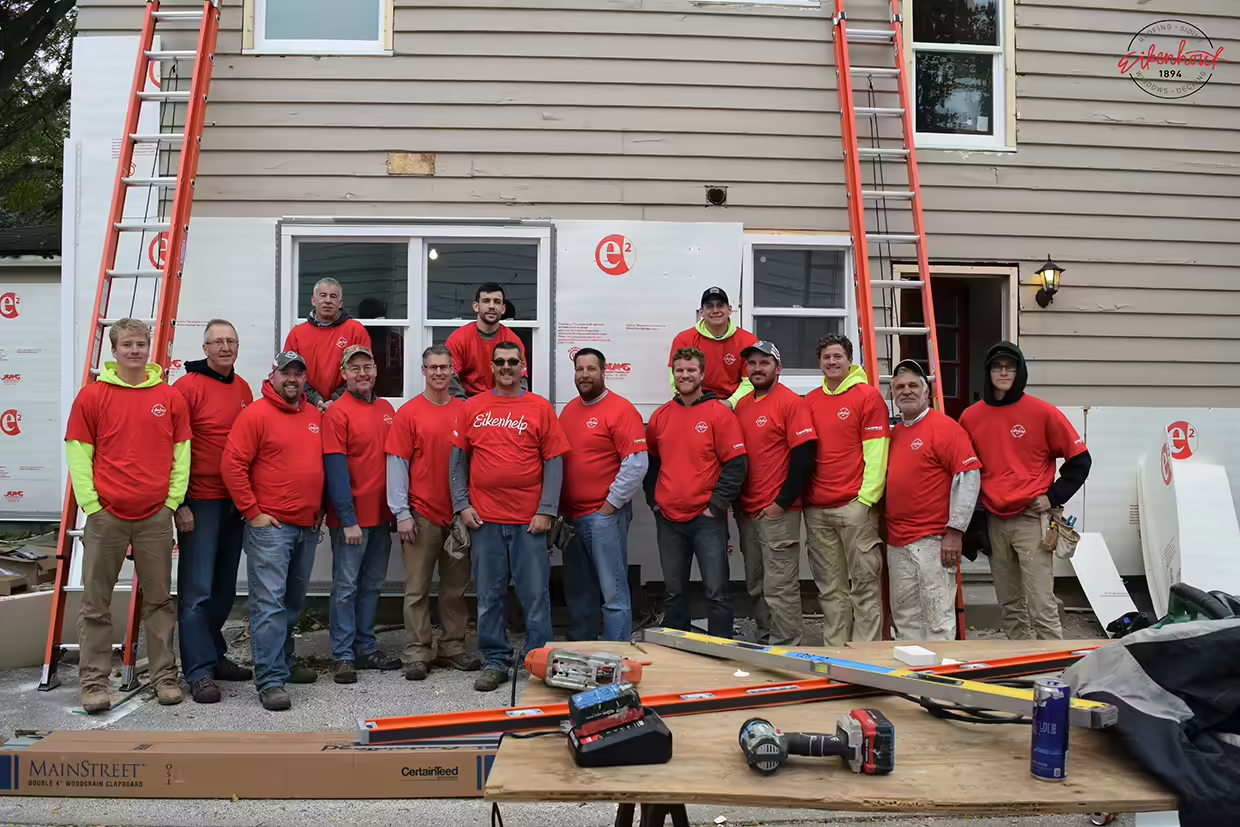
Part of that commitment to treating people fairly extends to the company’s extensive healthcare program. “We’ve got 150 employees on our healthcare program, and probably 350 people total when you factor in their families,” Greg said. “It’s a big expense, and it gets tougher every year, but you’ve got to have it. You’ve got to take care of your people.” The program may get more challenging to manage, but Greg remains firm in his belief: “Just be good people.”
Community involvement is another cornerstone of Eikenhout’s philosophy. The company sponsors local Little League and high school teams, as well as food banks across Michigan, a practice they affectionately call ‘Eikenhelp.’ Greg shared, “We actively support charities that our employees are involved in, whether it’s donating uniforms or materials to rebuild a dugout.”
Looking Ahead
Eikenhout is positioned for continued growth with plans to open additional locations in Michigan over the next decade while maintaining its core values of promoting from within and supporting the local community. For the Schierbeek family, Eikenhout is not just a legacy; it’s a way of life. Through generations of leadership, they’ve proven that a family-owned business can thrive in a competitive landscape by staying true to its values and embracing change. As the company heads into its next chapter, it does so with the strength of its history and the promise of a bright future.
This interview has been edited for length and clarity. Email fba@fbagr.org if you are interested in exploring feature opportunities.
Family Business Alliance strives to help family businesses with the tools, resources, and connections to help businesses succeed. Learn more about our resources including Leading Forward, Succeeding in Succession, and Navigating Governance that help to advance family business in our community.
Family Business Alliance Elects Executive Committee
Family Business Alliance is pleased to announce the election of the following board members to the Executive Committee. As of January 2025, they will serve on the organization’s Executive Committee for a one-year term with the option to renew.
Randy Boss, Chair
Certified Risk Manager and Insurance Advisor, Ottawa Kent Insurance Agency Co-founder of Emerge Apps

A member of FBA since 2011, Randy has served organizations throughout Michigan for over 40 years as a certified risk manager and insurance advisor. In 2015, he co-founded Emerge Apps with his son. In addition to serving on the FBA Board and Membership Committee, Randy also founded and chaired Employers for Better Health, whose mission is to improve the health and safety of community members by increasing awareness and reducing risk for West Michigan Employers. He also served as a Board Member, Chair of the Safety Committee, and Certified ABC Safety Academy Instructor for Associated Builders and Contractors of West Michigan
Michelle Timmerman, Vice Chair
Vice President and General Manager, Direct Supply, Inc.
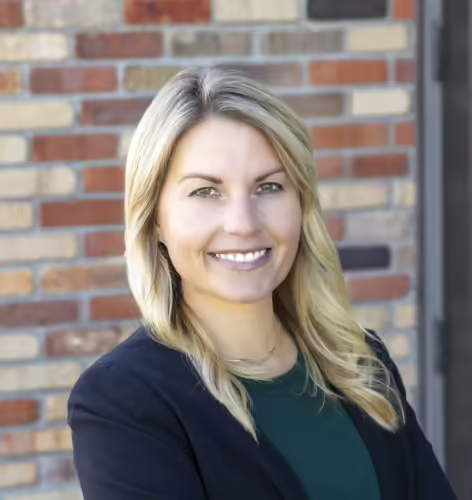
A member of FBA since 2017, Direct Supply is a wholesale distributor of interior construction materials and is a certified woman owned organization. A second-generation family business leader, Michelle’s history in the company, business management experience, and love for design drive her passion for the business. Direct Supply Inc. supplies manufacturers, fabricators, retailers, and builders with raw materials and components that go into finished goods, such as furniture, casework, countertops, and cabinetry.
Dave Straw, Secretary
Former Chief Operations Officer, Skytron

An FBA member since 2011, Dave has provided leadership and assistance to private and non-profit organizations throughout West Michigan. During his career, he has directed plant expansions, adopted new manufacturing technologies, created training and development programs for employees, and developed effective cross functional teams to grow and scale businesses. He has also served at several family run organizations in key executive roles, assisting them in the transition from one generation to the next. In addition to serving as an FBA Board Member and Peer Group Moderator, Dave also serves as a Board Member of Koeze and American Red Cross of West Michigan.
Todd Van Haren, Partner at SecurAlarm, LLC, was re-elected to continue to serve as Treasurer. Amanda VanFossen will now serve as Immediate Past Chair through 2025.
With 185 members, Family Business Alliance is a unique member-driven business association in West Michigan that stands out for its commitment to family business leadership and family ownership. FBA serves to create a connected community of thriving family businesses, fosters peer learning, and authentic relationships.
Family Business Alliance Elects Three New Board Members
Family Business Alliance (FBA) is pleased to announce the addition of three new board members for a three-year term beginning in January 2025. They include:
Eric Wildey, Chief Executive Officer, Game Room Guys
2nd Generation Family Business Owner, FBA Member since 2015, Peer Group Participant

In June of 2023, Eric transitioned day-to-day leadership of the business from his father. He executed the buyout of a non-family partner with the objective of restoring 100% ownership within the family, as well as relocating an underperforming manufacturing operation from Bay City, MI to Grand Rapids, MI. Prior to becoming CEO, Eric served as COO. He oversaw the company’s sales of the amusement route division and FEC business, while leading the continued growth of our e-commerce sales and distribution operation. He successfully negotiated and executed the acquisition of a vendor as part of their strategy to enter the manufacturing space and develop their own products. Additionally, he managed the challenging pandemic environment, addressing facility closures, medical protocols, supply chain disruptions, and unprecedented demand.
Carrie Wilson, Chief Executive Officer, Freedom Construction
1 Generation Family Business, FBA Member since 2022, and Peer Group Participant

With a Master of Fine Arts in Creative Writing, 10+ years of leadership and operations in multiple industries, and a passion for community, Carrie strives to foster and support equitable opportunities in the commercial construction industry and beyond. In 2023, Carrie was recognized as an ATHENA Young Professional Leadership Nominee by the Grand Rapids Chamber of Commerce and landed on Crain’s Grand Rapids “Notable Leaders in Commercial Real Estate” list. Carrie is also a Grand Rapids Rotary Club member, the Board of Directors for Builders Exchange of Michigan, and the Grand Valley State University CLAS Advisory Board.
Aubrie Bassett, General Manager, Spectrum E-Coat, division of Spectrum Automation Solutions
3rd Generation Family Business Member, FBA Member since 2011, Peer Group Participant

Aubrie graduated from Western Michigan with a degree in Sales and Business Marketing. After college, he worked for C.H. Robinson in sales and then bulk hazardous shipments. He joined his family business in 2019 and graduated with an Executive MBA from Michigan State in 2023. In 2024, he took over as a General Manager of Spectrum E-Coat.
We are excited to welcome Eric, Carrie, and Aubrie to join our active and engaged board of business leaders and look forward to their contributions and collaboration to ensure that our organization continues to evolve and adapt to create value for our members and the West Michigan community.
With 185 members, Family Business Alliance is a unique member-driven business association in West Michigan that stands out for its commitment to family business leadership and family ownership. FBA serves to create a connected community of thriving family businesses, fosters peer learning and authentic relationships.
FEUSA Tax Teams Focus on 2025 Tax Bill

By Pat Soldano
It’s looking more and more like a salvage operation on Capitol Hill as the Tax Cuts and Jobs Act provisions are being examined, culled, embellished, and reconstituted before it expires at the end of next year. But no matter, good, bad, or ugly, there will be a new tax bill in 2025.
As I write this, the House Ways and Means Committee is busy managing its ten Tax Teams to improve or save what it can from the 2017 Tax Cuts and Jobs Act (TCJA).
A few items on the salvage list include avoiding increased income taxes, stopping a decrease in estate tax lifetime exemptions, no increases in capital gains taxes, and restoring research and development expensing, to name a few.
As you may recall, the House Ways and Means Committee Chairman Rep. Jason Smith (R-MO) and Tax Subcommittee Chairman Rep. Mike Kelly (R- PA) formed ten Tax Teams earlier this year to study key provisions in the Trump-era
Tax Teams are set up as follows: American Manufacturing, Working Families, American Workforce, Main Street, New Economy, Rural America, Community Development, Supply Chains, U.S. Innovation, and Global Competitiveness. The stated goal of these teams is to: “help families, workers, and small businesses,” according to Smith.
What Are Key Tax Priorities?
But what are the key family business-oriented tax policies critical for our legislators to review? Our tax team experts on Capitol Hill have uncovered seven “Tax Policy Legislative Priorities” for the 119th Congress that will affect the funeral services industry.
In addition, this month we conducted a spot survey among 100 family businesses asking one question: “what is your number one tax priority?” But first, what are our seven Tax Policy Legislative Priorities? Here they are:
1.Preserve the current tax rates and brackets enacted under the Tax Cuts and Jobs Act. Family-owned businesses rely on the consistency of tax rates more than corporate businesses due to the increased complexity in succession planning. In addition, family businesses are uniquely suited to reinvest more in their business, their employees, and their communities, according to the results of our 2024 Annual Business Survey. In our survey, 52% of respondents indicated that if they paid less in taxes, they would invest more in the business, and 30% indicating they would raise their employees’ salaries.
2. Reduce the estate tax rate. Estate taxes severely hamper the ability for family business owners to pass the business and related assets (which are typically illiquid) to the next generation, making it more difficult for the business to continue growing, providing important jobs, and contributing to local communities. Of family businesses surveyed, 70% have generational employees and 81% have been in operation for 20 years or more. Eliminating the estate tax consistently ranks among the top three priorities.
3. Make permanent the Section 199A deduction for passthrough businesses. The Tax Cuts and Jobs Act included a new deduction to help ensure business owners pay tax rates more comparable to the corporate tax rate reduced by the TCJA. If allowed to expire, the section 199A deduction will be uniquely and severely disadvantage passthrough businesses. Of family businesses surveyed in our annual study, 78% operate as passthrough businesses, whether a partnership, LLC, S corporation, or other non-corporate structure.
4. Restore the full deductibility of research and development (R&D) expenses. The R&D deduction has historically been a bipartisan issue, gaining support from both parties in discussions on economically beneficial provisions to include in a 2025 tax bill. According to our family business survey, 22% of family-owned businesses are in the manufacturing/operations industry and 11% are in the construction/facilities industry, which rely heavily on R&D investment.
5. Restore 100% bonus depreciation. Next to their commitment to their employees, family-owned businesses rely on capital investments to compete, grow, and thrive. Bonus depreciation is a critical tool for family businesses to support their capital investments and finance facilities and equipment critical to their ability to grow, expand employment, and contribute to the communities in which they operate.
6. Preserve the capital-gains tax rate. Like the estate tax, the capital-gain taxes present an obstacle for capital formation and investments necessary for family businesses to expand, modernize, and succeed in an increasingly competitive market, with 13% of family businesses ranking it in their top three tax policies of concern – a 4% increase over the 2023 Survey.
7. Prevent the creation of a wealth tax. Wealth taxes – taxes on existing assets and unrealized gains – will be particularly harmful to family business owners who often disproportionately invest in the business in the hopes of passing it on to the future generations. In the most recent Family Business Survey, respondents identified preventing a “Wealth Tax” as one of their top five economic priorities – a concern that was nonexistent in prior years.
Top Of Mind Taxes
To further solidify thinking on tax priorities, this month we conducted a “spot poll” of 100 family-owned businesses on the topic of taxes in 33 states.
In this “Tax Policy Priorities Poll” we asked what their greatest tax concerns were right now, from increases in income taxes, to no increases in estate taxes, to restoring research and development expensing. The results showed the following percentage ranking for the top tax concerns by family business respondents.
The top concern was “No decrease in Estate Tax Lifetime Exemption,” which received 30% of votes from respondents, including those in the funeral services industry.
In a close second place, family businesses want to see “No Increase in the Income Tax Rate,” which received 28% of votes.
When it came to “No Increase in Capital Gains Tax Rate,” 13% respondents felt this was a top tax concern, while “Establishment of a Wealth tax” received 11% as a top priority. The “Wealth Tax” worry is trending upward.
Finally, such priorities as “Keep 199A Deduction for Pass Through Entity” worried 10% of family business respondents, while “Restoring R & D Expensing” got 4% of the vote.
Lastly, when asked the question about “Restoring Bonus Depreciation,” only 3% replied this was a top priority.
Let Congress Know
Nobody knows what Congress, or the new White House, will ultimately agree on when it comes to taxes, or how they will manage the growing gap between revenues and expenses, but everyone agrees there will be a new tax bill in 2025…good, bad, or ugly. The only way to state your case is to voice your concerns. The Congressional Family Business Caucus Meeting was held on Sept. 18 and in the meeting addressed pass-through taxes, enterprise structure, and possible wealth tax legislation.
Pat Soldano is the President of Family Enterprise USA and the Policy and Taxation Group, both nonpartisan organizations advocating for family enterprises of all sizes. They are the organizers of the Family Enterprise USA Annual Family Business Survey 2024 and assist in organizing the Congressional Family Business Caucus.
Yellowstone: Will Beth Dutton Save the Kingdom?

From Philo.com
Tradition and Change in Family Business: A Yellowstone Parallel to Reality
Like many family business leaders, John Dutton struggles to uphold longstanding traditions while external competitive pressures mount and next-gens clamor for change. “Yellowstone” is an American Western drama series that has portrayed the conflicts associated with a cattle ranch family business that began back in the 1890’s with the development of the American West. The much-anticipated final season debuts November 10, 2024.
The series stars Kevin Costner as John Dutton, the current patriarch, who is struggling to keep the business afloat to honor the legacy and the land he has inherited. External environmental and competitive forces have made the cattle rancher’s way of life harder to preserve. Dutton also has three surviving children who are fighting for their own goals, or against each other, which makes leadership transition or any other change very challenging.
So many unresolved issues remain before the series rides into the sunset – issues that mirror the real-life family business challenges that I’ve encountered as Director of the West Michigan Family Business Alliance. For instance:
- Who will win the siblings’ war for recognition, power and control: Beth, the devoted, tough, and business savvy daughter who seeks to protect her father at all costs; Jamie, the adopted son who lacks self-confidence and has consistently struggled to gain acceptance to the point of betraying his father; or Kayce, the only one who loves and embraces the cattle rancher’s way of life but seems uninterested in running the business?
- With the family’s livelihood and estate dependent on bringing the cattle to market, will this year’s cattle survive the illness spreading throughout Montana and killing the livestock?
- Will Kayce, and his Native-American wife, finally resolve their cultural differences rooted on the displacement of the Native American Indians during the American West development in the eighteenth century?
- Will John Dutton accept the changes suggested by his daughter Beth to keep the ranch profitable?
The most intriguing challenge is the current patriarch’s struggle to keep his family’s ranch – a kingdom of the size of Rhode Island – while upholding the traditions of the cattle ranching lifestyle in a challenging competitive landscape. Paradoxes are inherent to family businesses (Schuman, Stutz and Ward, 2010) and, like John Dutton, family business leaders must balance long-standing traditions with the need for change and innovation (McAdam, Clinton, & Dibrell, 2020). Successful family businesses must also identify what to preserve and what to let go of. This is called temporal symbiosis: the ability to concurrently perpetuate tradition while achieving innovation, acting as a “shield of the past and an engine for the future.” (Erdogan, Rondi and De Massis (2020).
The Struggle Between Tradition and Innovation
Family businesses are seen as protectors of the tradition, transmitting beliefs, practices, and legacies across generations, which together can limit the change needed to remain competitive over time (Erdogan et al., 2020). In “Yellowstone,” John Dutton’s tradition implies family loyalty, long and hard workdays herding cattle, and completing cattle drives by horseback. But his cattle ranching methods are not enough to withstand market disruptions, disease and the rising costs of operations and taxes. The ranch’s inability to vertically integrate downstream threatens not only its profitability, but also John Dutton’s ability to keep the promise made to his father of preserving the land for future generations.

From Pexels.com
Meanwhile, the next generation is not as aligned with the family business’s older ways, and the current generation struggles to keep them involved and engaged (Mc Adams et al, 2020). Beth Dutton, the next generation, envisions a different path forward. She breaks down the numbers for her father: the cattle are worth roughly $1.50/pound, hamburger is valued at $5.00/pound, and a good steak is worth roughly $39.00/pound. And another ranch, 6666, has sold over 8 million pounds of beef from their online website. Beth points out that while cattle ranchers sell cattle, ultimately selling beef is far more profitable. The money made from selling beef will create more financial stability for the Dutton family and could secure the land for future generations. This is a perfect example of vertical integration, without compromising tradition. She will do anything to keep her father happy and consequently save the family legacy and the ranch.
How Family Firms Can ‘Save the Ranch’
While the Dutton family and “Yellowstone” may be a dramatized example, laying the groundwork to avoid drama starts well before the conflict begins in family business. Successful transitions require engagement from both the current and the next-generation leaders. Past research (Kreg & Moores, 2017 and Craig, 2021) and my own experiences show that
Next-generation leaders are:
- Preparing and developing their business and leadership skills to move the business forward.
- Taking initiative (often without waiting for the baton to be passed).
- Developing a collaborative leadership style with trusted advisors and allies.
- Developing an entrepreneurial skillset and nurturing to establish this culture in the business.
The best current generation leaders are:
- Establishing trust in their next gen; treating them as equal business partners and not children.
- Providing them with a career path preparing them to lead the organization and to make their own decisions and mistakes.
- Recognizing that the next-generation leaders have different skills and will do things differently.
- Supporting the next-generation leadership development through a peer network, leadership training, and elevating professional opportunities within the organization.
- Learning to let go and move on.
Like other family businesses, Yellowstone’s path for future generations is not clearly defined or guaranteed. The above suggestions might help family businesses facing similar challenges chart a new vision to move forward, protect the business, and preserve the family legacy. While Beth Dutton’s solution is not the exact business the ranch has always been in, it could allow it to move forward. If John Dutton embraces this new vision and transition, he will be following his own advice to his troubled son Jamie: “Your grandfather used to say you can’t fix a broken wagon wheel, but you can use the parts to make a new one.”
Family Business Alliance strives to help family businesses with the tools, resources, and connections to help businesses succeed. Learn more about our resources including Leading Forward, Succeeding in Succession, and Navigating Governance that help to advance family business in our community.
Written by: Robin Burns, Family Business Alliance and Ana Gonzalez, Grand Valley State University
References
Craig, J. B., & Moores, K. (2017). Leading a family business: Best practices for long-term stewardship. Bloomsbury Publishing USA.
Craig, J. B. (2021). Continuity Model Generation: Integrating Wealth, Strategy, Talent, and Governance Plans. John Wiley & Sons.
Erdogan, I., Rondi, E., & De Massis, A. (2020). Managing the tradition and innovation paradox in family firms: A family imprinting perspective. Entrepreneurship Theory and Practice, 44(1), 20-54. https://doi.org/10.1177/1042258719839712
McAdam, M., Clinton, E., & Dibrell, C. (2020). Navigation of the paradoxical landscape of the family business. International Small Business Journal: Researching Entrepreneurship, 38(3), 139–153. https://doi.org/10.1177/0266242619898610
Schuman, A., Stutz, S., & Ward, J. L. (2010). Family business as paradox (pp. 22-29). New York: Palgrave Macmillan.
Subscribe
"*" indicates required fields


